

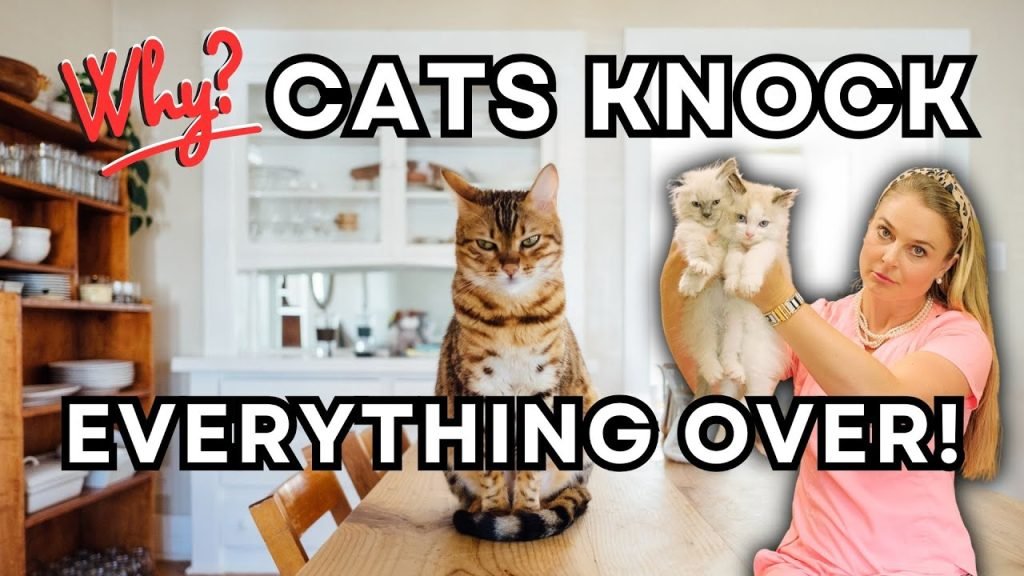
Have you ever wondered why your cat seems obsessed with knocking things off tables and shelves? You’re not alone.
This quirky behavior can be puzzling and sometimes even frustrating. But there’s more to it than just mischief. Understanding why your cat does this can help you connect with them better and even prevent those unexpected messes. Keep reading to discover the surprising reasons behind this curious habit and what it means for your furry friend.

Credit: deziroo.com
Instinctual Behavior
Cats knocking things over isn’t just random mischief; it’s deeply rooted in their instincts. This behavior traces back to their wild ancestors and survival skills. Understanding this instinct helps you see your cat’s actions in a new light and respond better.
Hunting Practice And Object Testing
Cats often use their paws to tap or bat at objects, mimicking how they would test prey. This action helps them understand if something moves or is safe to eat. When your cat knocks a glass off the table, it’s like a mini hunting drill—checking if the object reacts like prey would.
Curiosity And Environmental Exploration
Your cat’s world is full of new smells and sounds. Knocking items over is a way to investigate these unfamiliar things. Think of it as your cat’s way of gathering information about their surroundings.
Attention-seeking Rooted In Instinct
Instinctively, cats learn to get noticed by their group or human companions for survival needs. Knocking objects is a quick way to grab your attention. If your cat is hungry or bored, this behavior intensifies as a survival tactic to ensure their needs are met.
Play And Energy Outlet
Wild cats expend energy hunting and exploring for survival. Domestic cats still have that same energy to burn off. Knocking things over can be your cat’s way of playing and releasing pent-up energy, linked to their instinctual drive to stay active and alert.
Have you ever observed what happens right before your cat knocks something down? Noticing these moments can help you understand their instinctual triggers and possibly redirect their energy into safer play activities.

Credit: ashevillecatweirdos.org
Exploring Curiosity
Cats are naturally curious creatures. Their instinct drives them to explore their environment. This curiosity often leads them to knock things over. Understanding this behavior helps us see why cats act this way.
Exploring objects with their paws helps cats learn about the world. Knocking items off surfaces gives them immediate feedback. It reveals if the object moves, sounds, or falls apart. This interaction satisfies their need to investigate.
Testing Objects For Movement And Sound
Cats tap or push objects to see if they move. They listen for sounds that objects make when knocked over. This testing mimics hunting behavior. It sharpens their senses and keeps their minds active.
Seeking Attention Through Play
Knocking things over often gets a reaction from owners. Cats notice this and repeat the behavior. They use this as a way to engage with people. It becomes a playful communication method.
Exploring Textures And Shapes
Different objects feel unique to a cat’s paw. They explore the texture and shape by touching and pushing. This sensory experience is important for their understanding. It adds variety to their environment.
Instinctual Hunting Practice
Knocking objects replicates hunting actions. Cats bat at prey to see if it moves. This behavior keeps their instincts sharp. It also provides mental and physical exercise.
Attention-seeking Actions
Have you ever noticed your cat’s fascination with pushing objects off tables or shelves right when you’re busy or not paying attention? This behavior often serves as a clear call for your focus. Cats quickly learn that knocking things over grabs your attention, even if it’s negative.
When your cat feels ignored, they might resort to this disruptive act to reconnect. It’s their way of saying, “Hey, look at me!” Understanding this can help you respond better and possibly reduce the behavior.
How Cats Use Knocking To Get Your Attention
Cats are smart observers. They notice that when they knock something off, you immediately react—maybe by scolding, talking, or simply looking their way.
This reaction reinforces the behavior. Even if you don’t want to encourage it, the fact that you respond gives your cat what they want: your focus.
Signs Your Cat Is Seeking Interaction
- Following you around the house persistently
- Vocalizing loudly or meowing repeatedly
- Rubbing against your legs or pawing at you
- Sudden playful or mischievous behavior near your workspace
If knocking things over occurs alongside these behaviors, it’s a strong sign your cat wants to engage with you.
Practical Ways To Redirect Attention-seeking Knocking
- Schedule regular play sessions:Use interactive toys to tire your cat out and fulfill their need for attention.
- Ignore the knocking:Avoid immediate reactions to discourage the behavior from being rewarding.
- Create designated play zones:Provide stimulating environments where your cat can explore and play safely.
- Offer alternative activities:Puzzle feeders or treat-dispensing toys can keep your cat busy and less likely to seek attention destructively.
Have you noticed which times your cat chooses to knock things over? Identifying these moments can help you anticipate their needs before the mess happens.
Playful Intentions
Cats often knock things over as part of their playful nature. This behavior is not random but a way for cats to engage with their environment. They use their paws to explore objects and test reactions. This playfulness helps them practice hunting skills and satisfy their curiosity.
Young cats especially use knocking objects over to entertain themselves. It keeps their minds active and bodies moving. Cats enjoy the noise and movement that follows. This can also be a way to get attention from their owners.
Testing Objects For Fun
Cats tap and push items to see what happens. They like to watch objects fall or roll. This activity stimulates their senses and keeps them alert. It also mimics their natural hunting instincts.
Engaging Their Hunting Instincts
Knocking things over is similar to swatting at prey. Cats practice timing and precision with their paws. This playful act helps them stay sharp and ready. It satisfies their need to chase and catch.
Seeking Interaction And Attention
Cats may knock objects to get noticed. They learn that this behavior often leads to a reaction. Owners may laugh, talk, or play with them afterward. This encourages cats to repeat the behavior for fun.
Hunting Practices
Cats knocking things over often puzzles their owners. This behavior is deeply rooted in their natural hunting instincts. Understanding these instincts can help you see why your cat interacts with objects the way it does.
Testing Their Environment
Cats use their paws to test the stability and texture of objects. This mimics how they would paw at prey to check its reaction. Have you noticed your cat tapping a glass or a small item repeatedly before knocking it off? They are simply assessing whether the object is safe or interesting enough to investigate further.
Simulating Hunting Movements
Knocking things over simulates the action of hunting and catching prey. Cats often bat objects to mimic striking at a moving target. This behavior helps keep their reflexes sharp and satisfies their urge to chase and catch, even indoors.
Practicing Capture And Release
In the wild, cats need to practice catching prey repeatedly. Knocking items off surfaces allows your cat to rehearse these movements safely. This repeated action is part of their learning process, sharpening their skills and maintaining their agility.
Seeking Attention Through Hunting Behavior
Your cat might knock things over to get your attention by showing off their hunting skills. They know this behavior often provokes a reaction from you. Have you ever wondered if your cat’s playful destruction is a way to engage you in a game?

Credit: www.youtube.com
Environmental Enrichment
Cats knocking things over often relates to their need for environmental enrichment. A stimulating environment keeps your cat happy and mentally sharp. Without enough activities or challenges, cats may turn to knocking objects off shelves as a way to entertain themselves or test their surroundings.
Think about your own day. Would you stay focused and calm if there was nothing to engage your mind or body? Cats feel the same way. They need variety and play to satisfy their natural curiosity and hunting instincts.
Creating A Stimulating Space
Make your home a playground for your cat. Add climbing trees, scratching posts, and puzzle feeders that challenge their problem-solving skills. These enrichments reduce boredom and help your cat use energy in positive ways.
Try rotating toys weekly to keep your cat interested. A toy that was ignored last month might become the favorite today. Small changes can make a big difference in preventing mischievous behavior like knocking things over.
Interactive Playtime
Spend time playing with your cat every day. Use wand toys or laser pointers to mimic hunting. This not only entertains your cat but also strengthens your bond.
Notice how your cat reacts to different toys and activities. Does your cat prefer chasing, pouncing, or batting objects? Tailor play sessions to fit their style and watch their energy shift from destructive to engaged.
Safe Exploration Opportunities
Cats love to explore new textures and spaces. Provide boxes, paper bags, or tunnels for them to investigate. These simple items can keep them busy and less likely to knock over fragile things.
Have you ever seen your cat carefully inspect a new object? That curiosity is natural and healthy. Offering safe outlets helps satisfy it without risking your favorite decorations.
Training And Solutions
Training a cat to stop knocking things over takes patience and understanding. Cats use this behavior to explore and get attention. Changing it means giving them better options to express themselves.
Consistency is key. Use gentle corrections and rewards to guide your cat’s behavior. Avoid punishment, as it can cause stress and worsen the problem.
Creating A Cat-friendly Environment
Remove fragile items from easy reach. Provide sturdy toys to keep your cat busy. Use shelves or cat trees for climbing and exploration. These help satisfy their natural instincts safely.
Redirecting Attention With Toys
Offer interactive toys like feather wands or balls. Play sessions help burn energy and reduce boredom. Rotate toys often to keep interest high. This reduces the urge to knock over objects.
Using Positive Reinforcement
- Reward good behavior with treats or praise.
- Ignore or gently redirect unwanted actions.
- Be consistent with timing to link rewards to actions.
Positive reinforcement builds trust and encourages the right habits.
Setting Boundaries With Deterrents
- Use double-sided tape on surfaces to discourage jumping.
- Place citrus scents, which cats dislike, near breakables.
- Try motion-activated devices to startle cats gently.
These tools help teach limits without harm.
Frequently Asked Questions
Why Do Cats Knock Things Over At Home?
Cats knock things over to explore and satisfy their curiosity. It helps them test object stability and gather sensory information. This playful behavior also releases energy and keeps them mentally stimulated.
Is Knocking Things Over A Sign Of Boredom In Cats?
Yes, knocking objects can signal boredom. Cats need mental and physical stimulation. When understimulated, they find activities like knocking items entertaining and engaging.
Can Knocking Things Over Be A Cat’s Hunting Instinct?
Absolutely. Cats mimic hunting behaviors by pawing and knocking objects. This instinct helps them practice stalking and capturing prey in a safe environment.
How Can I Stop My Cat From Knocking Things Down?
Provide plenty of toys and playtime to reduce boredom. Secure fragile items and create cat-friendly spaces for exploration to minimize unwanted knocking behavior.
Conclusion
Cats knock things over for fun, curiosity, or to get your attention. This behavior is normal but can be managed with patience. Giving cats toys and playtime helps reduce this habit. Understanding why cats act this way builds a stronger bond.
Remember, they learn from your reactions. Stay calm and consistent to guide them. Enjoy your cat’s playful nature while keeping your space safe. Small changes make big differences in their behavior.
