

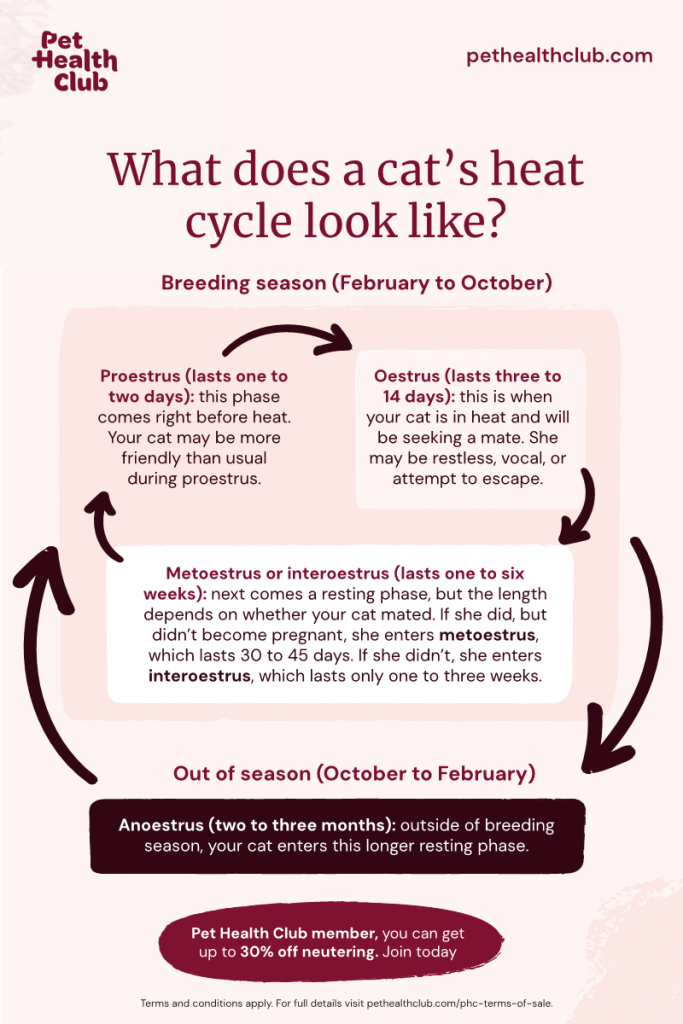
Is your cat acting restless, vocal, and clingy lately? If so, she might be in heat.
This can be a confusing and stressful time for both you and your furry friend. But don’t worry—knowing what to do can make all the difference. You’ll discover simple, effective ways to help your cat feel more comfortable and keep your home calm.
Keep reading to find out how you can support your cat through this natural but challenging phase.

Credit: www.petdrugsonline.co.uk
Recognizing Signs Of A Cat In Heat
Recognizing the signs of a cat in heat is important for any cat owner. Cats in heat show clear changes in behavior and physical traits. These signs help you understand your cat’s needs and manage her condition properly.
Behavioral Changes
Cats in heat act very differently. They become more vocal, often yowling loudly to attract mates. You may notice restlessness and pacing around the house. Some cats rub their bodies against furniture or people more than usual. They may also try to escape outdoors to find a mate. Increased affection and rubbing on your legs is common. Attention-seeking behavior often rises during this time.
Physical Indicators
Physical signs show a cat is in heat too. The genital area may appear swollen and red. You might see a small amount of clear or slightly bloody discharge. Cats often hold their tail to the side, known as “flagging.” This posture signals readiness to mate. You may also notice increased grooming around the genital area. These signs usually last several days and repeat every few weeks.
Comforting Your Cat
Comforting your cat during her heat cycle helps ease her stress and restlessness. Cats in heat often feel uneasy and need extra care. Creating a calm space and providing warmth can soothe her. These simple steps help your cat feel safer and more relaxed.
Creating A Calming Environment
Find a quiet room where your cat feels safe and undisturbed. Keep the lighting soft to reduce overstimulation. Use gentle sounds or soft music to mask outside noises. Provide cozy bedding with familiar scents to comfort her. Avoid loud noises or sudden movements that might scare her.
Using Heat Pads
Heat pads can offer soothing warmth, similar to a mother cat’s body heat. Place a low-heat pad under her bedding, ensuring it is safe and not too hot. Check the temperature regularly to prevent burns. Warmth helps relax muscles and calm her nerves. Never leave a heat pad on unattended for long periods.
Managing Excessive Meowing
Excessive meowing is one of the most noticeable behaviors when your cat is in heat. It can be overwhelming, especially if you’re not sure how to calm your furry friend. Understanding how to manage this vocalization can make a huge difference for both you and your cat’s comfort.
Distracting Techniques
Redirect your cat’s attention away from meowing by introducing new and exciting stimuli. A sudden noise like a gentle clap or the sound of a toy can catch her interest. This interruption helps break the cycle of continuous meowing.
Using scents is another powerful distraction. Cats respond well to catnip or valerian root, which can shift her focus and reduce vocalizing. Have you tried rotating different toys or scents to see which one captures your cat’s attention best?
Interactive Play
Engaging your cat in interactive play provides both mental and physical stimulation. Use feather wands, laser pointers, or small balls to keep her moving and thinking. This activity tires her out and decreases her need to meow excessively.
Spend at least 10-15 minutes a few times a day playing with her. This focused time helps strengthen your bond and channels her energy into fun rather than noise. Have you noticed how a tired cat is often a quieter cat?

Credit: www.freep.com
Preventing Unwanted Mating
Preventing unwanted mating is key when your cat is in heat. It keeps her safe and avoids unexpected litters. Taking simple steps can protect your cat and your home. Control her environment carefully to reduce risks.
Keeping Your Cat Indoors
Keep your cat inside during her heat cycle. Outdoor access increases the chance of mating. Inside, she stays safe from aggressive males and accidents. Provide toys and attention to reduce her stress. A quiet, comfortable space helps her stay calm.
Securing Windows And Doors
Check all windows and doors for gaps or openings. Cats can squeeze through small spaces to escape. Use screens or barriers to block exit points. Close doors firmly and avoid leaving them open. Monitor visitors’ entrances to prevent your cat from slipping out.
Considering Spaying
Considering spaying your cat is an important choice for her health and your home. Spaying stops her heat cycles and prevents unwanted litters. It also helps reduce behaviors like yowling and restlessness during heat. Understanding the benefits and timing can guide you to make the best decision for your pet.
Benefits Of Spaying
- Prevents pregnancy and overpopulation of cats
- Reduces risk of certain cancers and infections
- Lessens heat-related behaviors and stress
- Improves overall health and lifespan
- Eliminates the messy discharge during heat
Timing And Process
Spaying is usually done when the cat is around five to six months old. Some vets may perform it earlier or later based on health and breed. The surgery is quick and done under anesthesia. Recovery takes a few days, with mild discomfort.
After surgery, keep your cat calm and indoors. Follow the vet’s instructions for wound care and activity limits. Most cats return to normal in a week or less.
Consulting A Veterinarian
Knowing when to consult a veterinarian during your cat’s heat cycle can make a big difference in managing her comfort and health. A vet’s guidance can help you understand what’s normal and what might need attention. Don’t hesitate to reach out if you feel uncertain or overwhelmed by your cat’s behavior.
When To Seek Help
If your cat’s heat cycle lasts unusually long or she seems distressed beyond typical restlessness, it’s time to see a vet. Signs like excessive vocalization, refusal to eat, or unusual discharge are clear signals you shouldn’t ignore.
Also, if this is your cat’s first heat, a vet checkup can confirm everything is progressing normally. You might notice behaviors that puzzle you—your vet can clarify if these are standard or if medical intervention is needed.
Veterinary Advice On Heat Cycles
Vets often recommend spaying as a permanent solution to prevent heat cycles and related health risks. If you’re not ready for that, they can suggest safe ways to ease your cat’s discomfort during heat.
Your vet might explain how to create a calm environment or advise on products that can help reduce stress. They can also teach you how to monitor your cat for signs of complications, empowering you to act quickly if problems arise.
Have you noticed changes in your cat that worry you? Asking your vet these questions can provide reassurance and practical steps to support your pet’s well-being through her heat cycles.

Credit: felinefancy.co.uk
Frequently Asked Questions
How Can I Tell If My Cat Is In Heat?
Signs include loud vocalizing, restlessness, and rubbing against objects. Your cat may also display a raised hindquarters posture and increased affection.
What Should I Avoid Doing When My Cat Is In Heat?
Avoid letting your cat outside unsupervised to prevent unwanted mating. Don’t punish her for behavior changes; instead, provide comfort and patience.
How Long Does A Cat’s Heat Cycle Last?
A typical heat cycle lasts 7 to 10 days. If your cat doesn’t mate, the cycle may repeat every two to three weeks.
Can I Calm My Cat Naturally During Heat?
Yes, keep her in a quiet, comfortable space with toys and gentle petting. Avoid loud noises and stress to help soothe her.
Conclusion
A cat in heat needs patience and care. Keep her calm and safe. Provide quiet space and fresh water. Play gently to distract her. Spaying helps prevent future heat cycles. Talk to your vet for advice. Understanding her needs makes this time easier.
Your cat will feel better soon. Stay patient and loving throughout.
