

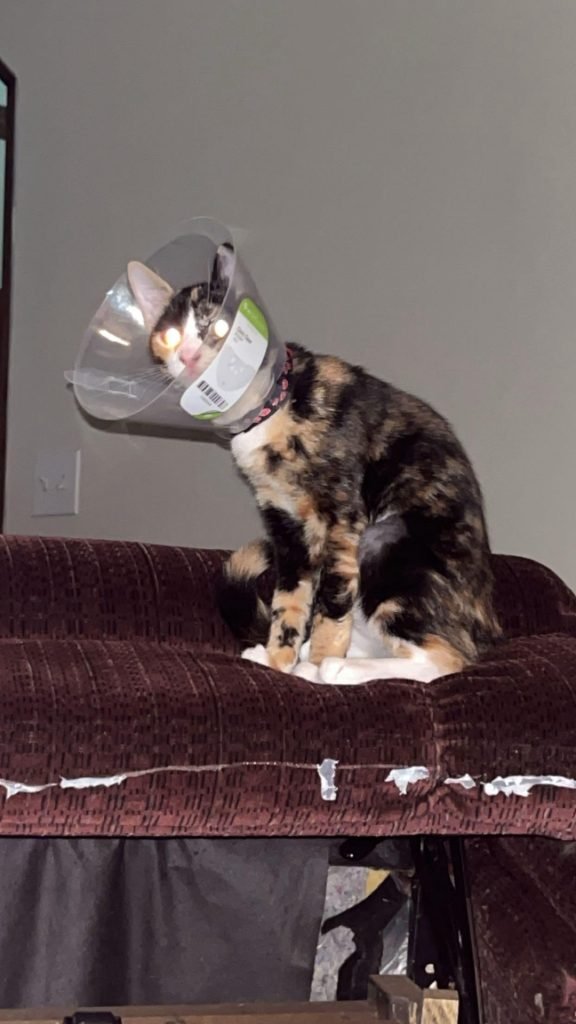
If your cat has just been spayed, you’re probably wondering how long she’ll need to wear that uncomfortable cone. You want her to heal quickly, but you also want to keep her safe and comfortable.
Knowing the right amount of time for the cone can make a big difference in her recovery and your peace of mind. You’ll discover exactly how long your cat should wear the cone after spaying, why it’s so important, and some helpful tips to make the process easier for both of you.
Keep reading to give your furry friend the best care possible.

Credit: www.reddit.com
Post-surgery Cone Purpose
After your cat’s spay surgery, the cone plays a crucial role in her recovery. This simple device stops her from licking or biting the surgical site, which can cause infections or slow down healing.
Think about it: your cat’s natural reaction is to groom herself, but right after surgery, this instinct can do more harm than good. The cone acts as a protective barrier, giving the incision the time it needs to heal properly.
Preventing Infection And Irritation
The cone keeps your cat from scratching or licking the wound. Even a small scratch can introduce bacteria, leading to infections.
In one case, a friend’s cat removed her stitches by licking too much, which caused a painful infection and extended recovery by weeks. Protecting the area with a cone helps avoid these setbacks.
Supporting Faster Healing
When the wound stays clean and undisturbed, it heals faster. The cone ensures your cat’s paws and tongue don’t irritate the incision, so the body can do its job.
Have you noticed how even minor irritation can slow your own healing? It’s the same for cats, but they can’t understand why they must avoid their own wounds.
Reducing The Risk Of Complications
Without a cone, your cat might accidentally reopen stitches or cause bleeding. This can require emergency veterinary visits and additional treatments.
Wearing the cone might seem annoying to your cat, but it’s a small inconvenience compared to the risks of complications. Wouldn’t you agree that preventing a bigger problem is worth a little discomfort?

Credit: www.reddit.com
Recommended Cone Duration
After your cat’s spay surgery, the cone—or Elizabethan collar—is essential to protect the incision site. Knowing how long your cat needs to wear the cone helps prevent complications like infection or reopening the wound. The recommended duration depends on several factors, including your cat’s healing speed and behavior.
Typical Duration For Wearing The Cone
Most veterinarians suggest keeping the cone on for about 10 to 14 days. This timeframe allows the incision to heal enough to reduce the risk of your cat licking or scratching the area. Removing the cone too early can lead to serious setbacks, so patience is key.
Think about your cat’s activity level—if she’s very curious or restless, the full 14 days might be necessary. On the other hand, calmer cats who don’t try to reach the wound might manage with a slightly shorter period.
Signs Your Cat Is Ready To Have The Cone Removed
You can check the incision site daily. Look for signs like reduced redness, no swelling, and no discharge. If the wound appears fully closed and your cat isn’t trying to disturb it, it might be safe to remove the cone.
Still, it’s a good idea to get the vet’s opinion before taking off the cone. Have you noticed your cat persistently pawing at the collar or seems stressed? Sometimes a brief adjustment period is necessary before full removal.
When To Extend The Cone-wearing Period
Some cats take longer to heal, especially if there’s swelling or minor infection. If your cat reopens the incision or if you spot scabs or oozing, keep the cone on longer. Your vet may advise extending the cone time beyond two weeks in these cases.
It’s frustrating to see your cat unhappy with the cone, but think about the consequences of early removal. Would you risk your pet’s healing just to ease their discomfort for a day or two?
Signs To Remove The Cone
Knowing the right time to remove the cone from your cat after spaying is important. The cone protects your cat’s healing wound from licking or scratching. Removing it too soon can cause infections or open the wound. Watch your cat closely for clear signs that the cone is no longer needed.
Wound Looks Fully Healed
Check the spay incision daily. The skin should be closed and smooth. There should be no redness, swelling, or bleeding. The wound should not have any discharge or scabs. If the area looks normal and healthy, the cone may be removed.
Cat Shows No Interest In The Incision
Observe your cat’s behavior. If she stops licking, biting, or scratching the wound, it is a good sign. When the cat ignores the area, the risk of reopening the wound is low. This means the cone is less necessary.
Vet Gives Approval
Your veterinarian is the best judge. Schedule a follow-up visit after surgery. The vet will check the healing progress. Only remove the cone after the vet confirms it is safe. This helps prevent complications and ensures proper healing.
Cat Eats And Moves Normally
Watch your cat’s daily activities. Normal eating, drinking, and movement show comfort. If your cat moves without bumping or getting stuck, the cone may be removed. This prevents stress and helps your cat feel better.
No Signs Of Infection Or Irritation
Look for signs of infection such as pus, bad smell, or heat around the wound. Check for irritation from the cone itself, like rashes or hair loss. If none are present, the cone can be safely taken off.
Monitoring Surgical Site
Keeping a close eye on your cat’s surgical site after a spay is essential for a smooth recovery. You want to catch any signs of trouble early and make sure your feline friend stays comfortable. Monitoring helps you decide when your cat can finally ditch the cone without risking complications.
Checking For Redness And Swelling
Look at the incision area daily. A little redness is normal, but bright red or spreading redness could signal infection.
Swelling should be minimal and go down over time. If it looks puffy or feels warm, that’s a warning sign.
Noticing Discharge Or Odor
Keep an eye out for any fluid oozing from the incision. Clear or slightly yellowish discharge is usually fine, but thick, green, or foul-smelling discharge is not.
If you detect an unusual smell, it’s best to contact your vet immediately. This could mean bacteria have invaded the site.
Observing Your Cat’s Behavior
Your cat’s attitude can tell you a lot about healing. If she’s licking or biting at the incision despite the cone, that could delay healing or cause infection.
Also watch for signs of pain, like hiding, aggression, or decreased appetite. These could mean the site is irritated or infected.
Using A Simple Daily Checklist
- Inspect incision for redness and swelling
- Check for any discharge or unusual odor
- Note any excessive licking or biting attempts
- Observe changes in behavior or appetite
Keeping a checklist helps you stay organized and ensures nothing gets missed during the critical healing period.
Alternative Protective Gear
Cats need protection after spaying to stop them from licking or biting the wound. Traditional plastic cones are common but not the only choice. Alternative protective gear can offer comfort and prevent injury effectively.
These options reduce stress and allow cats to move more freely. They come in different styles and materials. Choosing the right one depends on your cat’s behavior and healing needs.
Inflatable Collars
Inflatable collars look like small travel pillows around the cat’s neck. They stop the cat from reaching the surgery site with its mouth. These collars are soft and lightweight. They cause less stress than hard plastic cones. Cats can see and hear better with inflatable collars. They are easy to clean and store. However, they might not protect as well if the cat is very active or persistent.
Soft E-collars
Soft E-collars are made from fabric or foam. They work like traditional cones but are more flexible. These collars are gentler on the cat’s skin. They allow the cat to eat, drink, and sleep comfortably. Soft E-collars come in various sizes and colors. They also reduce injury risk to furniture or people. They may not stop all cats from licking, especially determined ones.
Surgical Recovery Suits
Surgical recovery suits cover the cat’s body, protecting the surgery area. These suits fit like a shirt or onesie. They prevent licking and scratching without blocking vision. Recovery suits are made from breathable materials. They keep the wound clean and safe. Suits allow cats to move freely and stay warm. They require washing and proper fitting for comfort. Some cats may try to remove the suit, so monitoring is needed.
Promoting Comfortable Recovery
Promoting comfortable recovery after your cat’s spay surgery is key to helping her heal quickly and happily. The cone can feel strange and restrictive, so making her environment as soothing as possible reduces frustration and encourages rest. Creating comfort is about more than just the cone—it’s about the whole experience your cat goes through during recovery.
Creating A Safe Space
Your cat needs a quiet, cozy area where she feels secure and undisturbed. Choose a small room or a corner with soft bedding and easy access to water, food, and a litter box.
Keep this space free from loud noises and other pets to avoid unnecessary stress. You might add familiar blankets or toys to give her a sense of normalcy.
Have you noticed how your cat reacts when she’s in a new or busy environment? Minimizing changes helps her focus on healing.
Reducing Stress And Anxiety
Stress can slow down your cat’s recovery and make wearing the cone more challenging. Speak softly and move calmly around her to keep anxiety low.
Offer gentle petting if she enjoys it, but watch for signs she needs space. Some cats prefer quiet over interaction when healing.
Try using pheromone sprays or diffusers designed for cats; many owners find these help their pets relax during tough times.
Have you tried adjusting the cone to make it less bothersome? Sometimes padding the edges or ensuring it fits well makes a big difference in comfort.
Diet And Hydration Importance
Keeping your cat’s diet and hydration on point after a spay surgery is crucial, especially while they wear that protective cone. Proper nutrition and fluids help speed up healing and keep your furry friend comfortable. Ignoring these can lead to slower recovery or even complications.
Nutrition Needs During Recovery
Your cat’s body is working hard to heal the surgery site. This means they need high-quality protein to rebuild tissues and enough calories to fuel the process.
Try offering soft, easily digestible food if your cat struggles with the cone or feels uncomfortable eating. Wet food can be a good choice because it’s easier to eat and more appealing when they feel off.
Have you noticed your cat’s appetite dipping? Don’t force-feed, but encourage small, frequent meals. This helps maintain energy without overwhelming them.
Keeping Your Cat Hydrated
Water is essential for healing and flushing out any medications your cat might be on. Make sure fresh water is always available and easy for your cat to reach despite the cone.
Some cats drink less after surgery. You can tempt them with ice cubes or a pet water fountain to keep them sipping. Hydration supports healthy skin and prevents urinary issues, which can be common post-surgery.
Signs Of Nutritional Or Hydration Problems
- Lack of appetite for more than 24 hours
- Excessive lethargy or weakness
- Dry gums or sunken eyes
- Vomiting or diarrhea
If you spot these, contact your vet immediately. Early intervention can prevent serious setbacks.
I once had a cat who refused to eat because the cone made it hard to reach her bowl. Switching to a shallow dish and offering canned food made a huge difference in her recovery speed. Small changes in diet and hydration can be game-changers for your cat’s healing journey.

Credit: www.amazon.com
Signs Of Complications
Watching for signs of complications after your cat’s spay surgery is very important. These signs help you know if your cat is healing well or needs veterinary care. Early detection can prevent serious problems. Pay close attention to your cat’s incision and overall behavior during recovery.
Infection Indicators
- Redness and swelling around the incision area
- Discharge that looks yellow, green, or has a bad smell
- Warmth or heat near the wound
- Excessive bleeding or oozing
- Fever or shivering
These signs suggest infection. Contact your vet immediately if any appear. Proper care helps your cat heal faster.
Behavioral Changes
- Loss of appetite or refusal to eat
- Excessive hiding or lethargy
- Constant licking or biting at the incision
- Restlessness or inability to settle down
- Unusual aggression or vocalizing more than usual
Behavior changes can indicate pain or discomfort. Monitor your cat closely and seek help if these signs persist or worsen.
When To Consult A Veterinarian
Knowing when to contact your vet after your cat’s spay surgery is very important. The cone helps protect the wound, but some signs mean the cone might not be enough. Watching your cat closely can keep her safe and help her heal well.
Signs Of Infection Or Swelling
Look for redness, swelling, or pus around the surgery site. If the area feels hot or painful, your cat might have an infection. These symptoms need quick veterinary care.
Persistent Licking Or Biting
Some cats try to remove the cone or keep licking the wound. This can slow healing or cause more damage. If your cat cannot stop licking, the vet may suggest a different solution.
Changes In Behavior Or Appetite
A tired, very quiet, or not eating cat might be in pain or feeling sick. These changes can show complications from surgery. Contact the vet to check your cat’s health.
Difficulty Breathing Or Swelling Of Face
Rare but serious signs include breathing trouble or swelling near the face. These need immediate veterinary attention to prevent serious problems.
Wound Opening Or Bleeding
If the wound opens or bleeds a lot, the cone may not protect well enough. This situation needs prompt vet care to avoid infection or other issues.
Frequently Asked Questions
How Long Should My Cat Wear A Cone After Spay?
Typically, cats need to wear a cone for 10 to 14 days after spaying. This protects the incision from licking or scratching. Removing the cone too early can cause infections or delayed healing.
Can My Cat Remove The Cone Too Soon?
Yes, cats often try to remove the cone prematurely. It’s important to keep it on until the vet confirms healing. Using an appropriately sized cone helps prevent your cat from slipping it off.
What Are Signs My Cat Needs To Keep The Cone Longer?
If the incision is red, swollen, or oozing, the cone should stay on. Excessive licking or chewing at the site also means more protection is needed. Always follow your vet’s advice for cone duration.
Are There Alternatives To Traditional Cones For Spay Recovery?
Yes, alternatives include soft collars, inflatable collars, or recovery suits. These options can be more comfortable but still prevent your cat from disturbing the incision. Consult your vet for the best option.
Conclusion
Your cat usually needs a cone for about 10 to 14 days. This helps stop them from licking or biting the surgery area. Keeping the cone on ensures the wound heals well and avoids infection. Watch your cat closely during this time for any signs of trouble.
If the wound looks good and your vet agrees, you can remove the cone. Patience is key. Your cat will feel better soon and get back to normal.
