

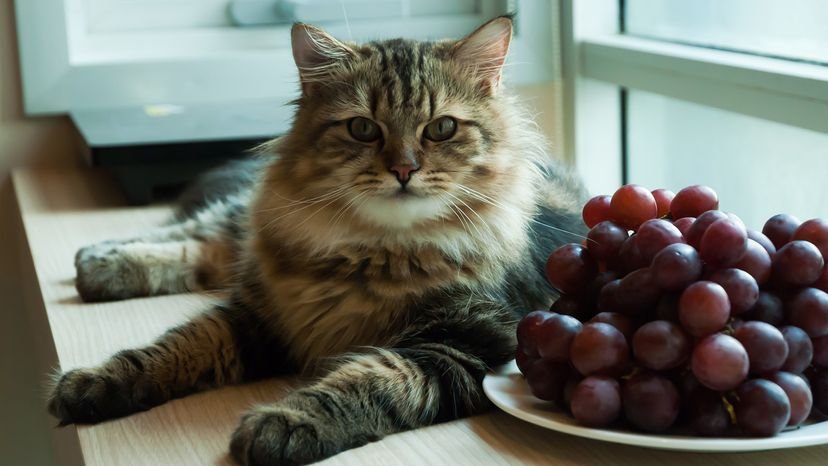
Have you ever caught your cat eyeing your grapes and wondered, “Can they actually eat these?” It’s natural to want to share treats with your furry friend, but when it comes to grapes, the question isn’t just about taste — it’s about safety. You might be surprised to learn how grapes can affect your cat’s health.
If you want to keep your pet safe and happy, understanding what foods are truly safe for them is crucial. Keep reading to find out if grapes belong in your cat’s diet or if they’re something you should keep far away.
Credit: www.chewy.com
Cats And Grapes
Cats should not eat grapes as they can be harmful and cause serious health problems. Even small amounts may lead to vomiting or kidney issues. Always keep grapes away from your cat to ensure their safety.
Cats and grapes. It’s an unusual pairing, right? Many cat owners wonder if their furry friends can munch on grapes. Understanding this topic is crucial for pet safety. Let’s unravel the mystery.Common Myths About Cats Eating Grapes
People often believe all fruits are safe for cats. This is not true. Grapes can be harmful to cats. Some pet owners think cats won’t eat grapes naturally. Cats are curious creatures. They might try anything once. Another myth is that only dogs suffer from grapes. Cats can face health issues too.Why Cats Might Be Interested In Grapes
Cats are naturally curious. They explore the world with their senses. The shape and color of grapes might attract them. Grapes roll easily. This makes them fun toys for cats. The sweet smell can also intrigue them. Cats often investigate new scents. Their interest doesn’t mean it’s safe. Always keep grapes out of reach.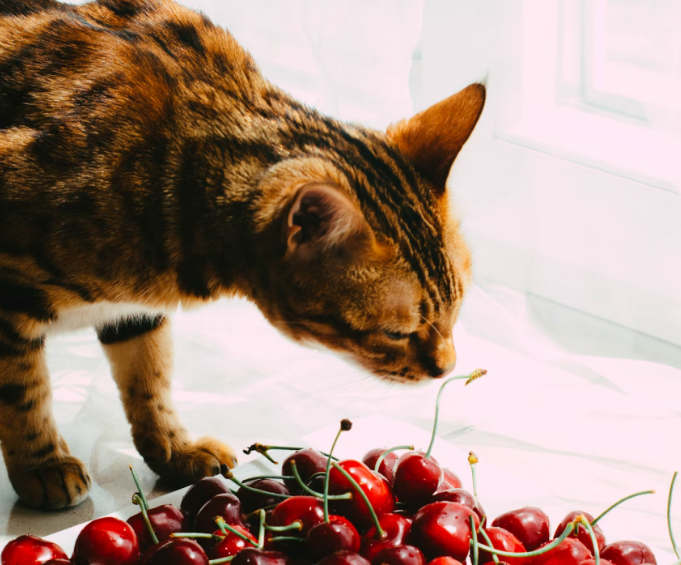
Credit: wopet.com
Toxicity Of Grapes To Cats
Cats should never eat grapes. Grapes are toxic and can cause serious health problems. Even a small amount can harm your feline friend. Understanding the toxicity of grapes helps protect your cat from danger. Watch closely for signs of poisoning if your cat gets into grapes.
Potential Health Risks
Grape toxicity can cause kidney failure in cats. The exact toxin is unknown but effects are severe. Eating grapes may lead to vomiting and diarrhea. Dehydration can follow due to fluid loss. Kidney damage might become permanent without quick care. Your cat’s life may be at risk.
Symptoms Of Grape Poisoning In Cats
- Vomiting within a few hours after eating grapes
- Diarrhea and loss of appetite
- Weakness and lethargy
- Abdominal pain or discomfort
- Increased thirst and urination or no urination at all
- Dehydration signs such as dry gums and sunken eyes
Recognizing these symptoms early can save your cat’s life. Immediate veterinary help is crucial for poisoned cats.
Safe Alternatives To Grapes
Grapes can be harmful to cats, so finding safe alternatives is important. Cats enjoy treats, but not all human foods are safe. Choosing the right snacks keeps your cat healthy and happy.
Fruits Cats Can Eat
Some fruits are safe and tasty for cats in small amounts. These fruits provide vitamins and hydration without risks.
- Blueberries – rich in antioxidants and low in sugar
- Apples – peeled and sliced, avoid seeds
- Bananas – a soft, sweet treat in moderation
- Cantaloupe – hydrating and full of vitamins
Healthy Treat Options
Besides fruits, many healthy snacks suit a cat’s diet better. These options support their natural carnivorous needs.
- Cooked chicken or turkey – no seasoning
- Small pieces of cooked fish – like salmon
- Commercial cat treats – made for feline nutrition
- Freeze-dried meat treats – preserve flavor and nutrients
What To Do If Your Cat Eats Grapes
Discovering your cat has eaten grapes can cause worry. Grapes are known to be harmful to cats. Acting quickly can help prevent serious health issues. Knowing the right steps to take is important for your cat’s safety.
Immediate Steps To Take
Remove any remaining grapes from your cat’s reach. Check your cat’s mouth for grape pieces and gently remove them if possible. Observe your cat closely for symptoms like vomiting, diarrhea, or lethargy. Provide fresh water to help flush out toxins. Avoid giving any home remedies without veterinary advice.
When To Contact A Veterinarian
Contact a veterinarian immediately if your cat shows any unusual symptoms. Early signs may include weakness, loss of appetite, or changes in behavior. Inform the vet about the amount of grapes eaten and the time of ingestion. Follow the vet’s instructions carefully for treatment and care. Prompt professional help can be lifesaving.
Preventing Accidental Grape Consumption
Keeping your cat safe from harmful foods like grapes requires careful attention to your home environment and habits. Accidental grape consumption can lead to serious health issues for your feline friend, so proactive steps are essential. Let’s look at practical ways to reduce the chances of your cat getting into grapes.
Safe Storage Tips
Store grapes and grape-containing products well out of your cat’s reach. Use sealed containers or high cabinets that your cat can’t access. Placing grapes in the refrigerator behind a closed door is another simple yet effective barrier.
Think about where your cat usually roams. If your cat likes jumping on counters or tables, avoid leaving grapes unattended in these areas. Even a small cluster left on a low surface can be tempting and dangerous.
- Keep fruit bowls in closed cabinets.
- Use childproof latches on kitchen cabinets if needed.
- Clean up grape stems and leftovers immediately after meals.
Training Your Cat To Avoid Harmful Foods
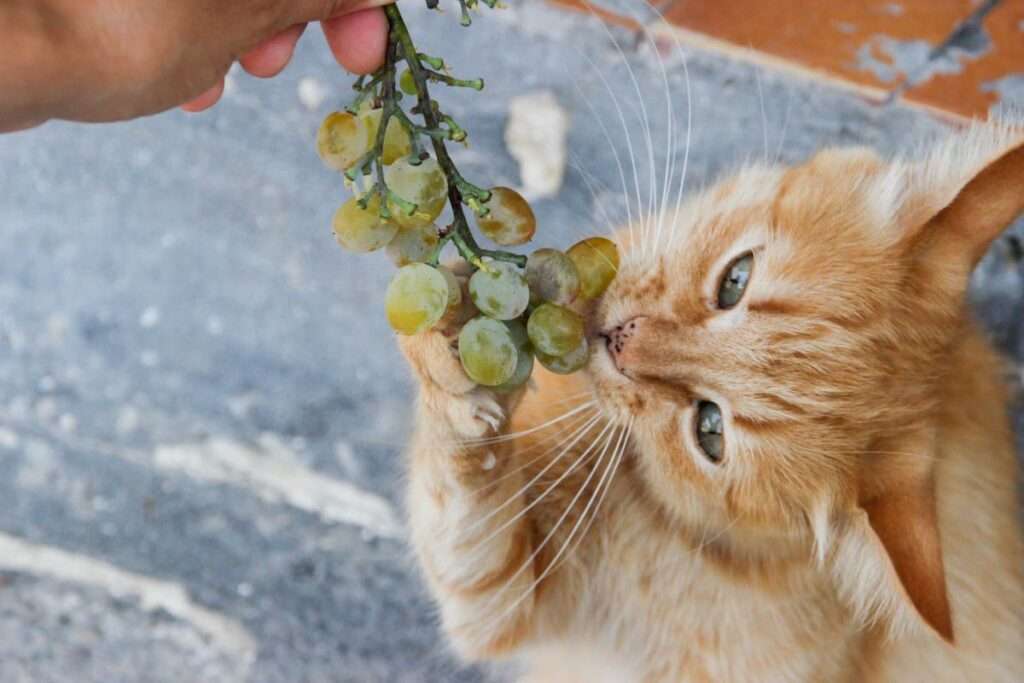
Teaching your cat to avoid grapes can add an extra layer of safety. Start by gently discouraging your cat when it shows interest in grapes or related products. Use a firm “no” and redirect their attention to a safe toy or treat.
Reward your cat for ignoring grapes by giving positive reinforcement like treats or affection. This builds a clear connection between avoiding grapes and receiving a reward. Over time, your cat will learn to stay away from these harmful foods.
Have you tried using taste deterrents like bitter sprays? Some cats dislike certain smells or flavors, which can help keep them away from off-limit foods. Just make sure any deterrent you use is safe and non-toxic for pets.
Credit: petsfoodhub.com
Frequently Asked Questions
Can Cats Safely Eat Grapes Or Raisins?
No, cats should never eat grapes or raisins. These fruits can cause kidney failure and serious health issues in cats.
Why Are Grapes Toxic To Cats?
Grapes contain unknown toxins harmful to cats’ kidneys. Even small amounts can lead to severe kidney damage.
What Symptoms Show If A Cat Eats Grapes?
Symptoms include vomiting, diarrhea, lethargy, and loss of appetite. Immediate vet care is crucial if ingestion occurs.
Are There Safe Fruits Cats Can Eat?
Yes, cats can eat small amounts of blueberries, strawberries, or melon as treats. Always introduce fruits gradually.
Conclusion
Cats should not eat grapes. Grapes can harm their health seriously. Even small amounts may cause problems. Always keep grapes away from cats. Choose safe treats like cat food or meat. Watch your cat closely for any signs of illness.
Quick action can save your pet’s life. Keep learning about what foods are safe. Protect your cat by feeding wisely every day. Your cat’s health depends on smart choices.
