

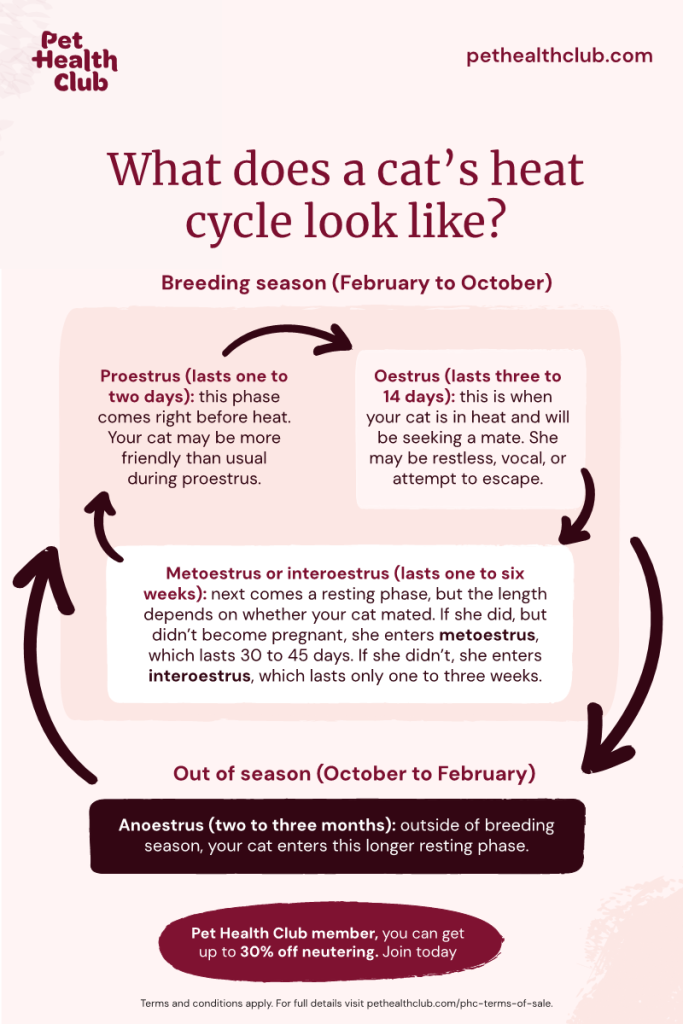
Ever wondered why your usually aloof feline friend is suddenly more vocal and restless? If your cat is not spayed, she might be experiencing her heat cycle.
Understanding the behavior of cats in heat is essential for any cat owner. It can be perplexing to see your pet undergo such drastic changes, but knowing what to expect can make this period easier for both of you. This guide will walk you through the signs, symptoms, and behavior changes you can expect.
You’ll gain insights into how to comfort your cat during this time and ensure her well-being. Curious to uncover the secrets of feline behavior during heat? Keep reading to learn more about what your cat is experiencing and how you can help.
Credit: www.pethealthclub.com
Signs Of A Cat In Heat
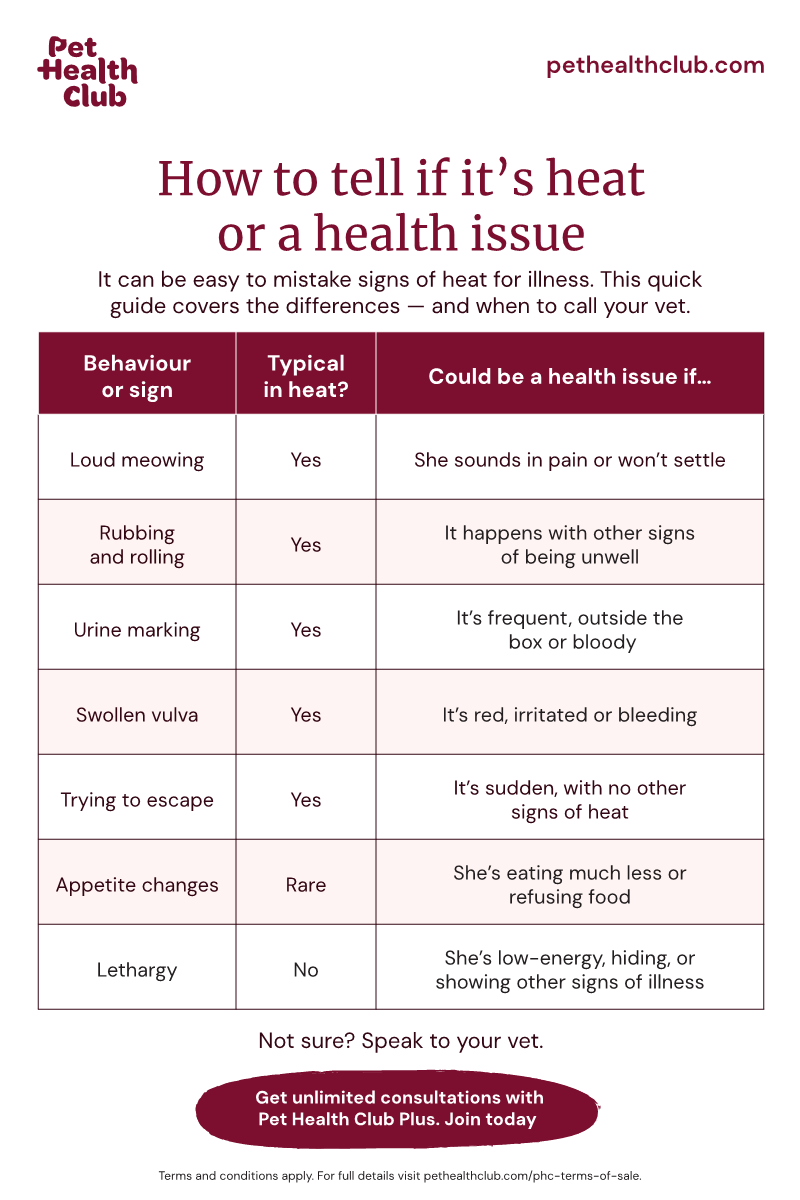
Cats in heat show clear signs that owners can notice easily. These signs help identify when a female cat is ready to mate. Understanding these behaviors makes caring for your cat easier. It also prevents unwanted pregnancies and stress for both cat and owner.
Vocalization Patterns
Cats in heat often become very vocal. They produce loud, persistent meows or yowls. These sounds can last for several minutes or even hours. The vocalizations serve to attract male cats nearby. The intensity and frequency of the sounds usually increase at night.
Increased Affection
A cat in heat shows more affection than usual. She may rub against people, furniture, or walls. Cats also knead with their paws more often. This behavior expresses comfort and a desire for attention. Owners might notice their cat following them around constantly.
Restlessness And Agitation
Restlessness is common in cats during heat. They pace around, unable to relax. Some cats may scratch doors or furniture more than normal. Agitation can also make them more aggressive or irritable. These behaviors reflect their strong hormonal changes.
Physical Changes
Physical signs help confirm a cat is in heat. The cat’s vulva may appear swollen or red. Some cats show a small amount of clear discharge. Tail position changes; they often hold it to the side. These signs usually last a few days and repeat every few weeks.
Credit: www.wboi.org
Behavioral Changes During Heat
When your cat goes into heat, you’ll notice her behavior shifting in noticeable ways. These changes can seem sudden and puzzling if you’re not prepared. Understanding what to expect helps you support your cat and manage the situation calmly.
Marking Territory
One of the most common signs is that your cat will start marking her territory more often. She may spray urine around your home, especially near doors and windows. This behavior is her way of signaling to male cats that she’s ready to mate.
It can be frustrating to clean up these marks repeatedly. Try to limit her access to areas where she tends to spray. Providing extra litter boxes and keeping them very clean can sometimes reduce this behavior.
Seeking Male Cats
Your cat might become restless and try to escape outdoors if she senses male cats nearby. She’ll actively seek out their presence, sometimes vocalizing loudly to announce her availability. This vocalization, often described as loud and wailing, can catch you off guard if you’re not familiar with it.
Have you ever heard your cat’s loud calls late at night and wondered what was going on? These cries are her way of attracting mates. Keeping her indoors and distracting her with play or attention can help manage this urge.
Posture And Body Language
During heat, your cat’s posture changes to signal readiness to mate. You might see her arching her back, raising her hindquarters, and moving her tail to the side. These movements are clear signals to male cats, but they also tell you she’s in heat.
Pay close attention to these body language cues. They can help you understand when the heat cycle is at its peak. Responding with calm affection and providing a safe, comfortable space can ease her stress during this time.
Managing A Cat In Heat
Managing a cat in heat requires patience and understanding. Cats in heat show restless and loud behavior. They need extra care to stay comfortable and calm. Providing a stress-free space helps reduce their anxiety. Engaging them with toys or safe outdoor time can ease their mood swings. Here are some ways to manage your cat’s heat cycle effectively.
Creating A Calm Environment
Choose a quiet room with soft lighting for your cat. Keep the room warm and cozy. Use blankets and cushions for comfort. Minimize loud noises and sudden movements. Play soft music or nature sounds to soothe her. Close windows to limit outside distractions. This helps lower her stress and restlessness during heat.
Using Toys And Distractions
Provide interactive toys to keep her busy. Toys like feather wands or laser pointers work well. Offer puzzle feeders to stimulate her mind. Rotate toys regularly to maintain interest. Play gently to avoid overwhelming your cat. Distracting her with fun activities reduces vocalizing and pacing. It also helps release her energy safely.
Safe Outdoor Access
Supervised outdoor time can calm a cat in heat. Use a secure harness and leash for safety. Avoid letting her roam freely to prevent unwanted mating. A fenced yard or enclosed patio works best. Outdoor smells and sights can distract her from heat behaviors. Always watch closely to keep her safe and relaxed.

Credit: felinefancy.co.uk
Health Considerations
Understanding the health considerations of cats in heat is crucial for any cat owner. The behaviors you observe are not just quirky actions—they often signal important biological and medical needs. Addressing these needs promptly can improve your cat’s well-being and prevent future complications.
Spaying Benefits
Spaying your cat offers significant health advantages beyond preventing unwanted litters. It reduces the risk of uterine infections and certain types of cancer, such as ovarian and mammary tumors.
Many cat owners notice that their pets become calmer and less prone to roaming once spayed. This can decrease the chance of injury or exposure to diseases.
Have you ever wondered if spaying might change your cat’s personality? Most cats retain their unique traits while gaining better overall health.
When To Consult A Vet
It’s important to consult a vet if your cat shows unusual signs during her heat cycle. Excessive vocalization, lethargy, or discharge could indicate an infection or other health issues.
If your cat goes into heat frequently without breeding, a vet visit can help determine if hormonal imbalances are involved. Early intervention prevents complications and keeps your cat comfortable.
Ask yourself: are you noticing behavior that seems out of the ordinary? Trust your instincts and reach out to your veterinarian for advice.
Preventing Unwanted Litters
Preventing unwanted litters is a key health and responsibility issue. Besides spaying, keeping your cat indoors during her heat cycle reduces the risk of accidental breeding.
Using secure window screens and doors can prevent your cat from escaping during her most vulnerable times. Providing distractions like toys and interactive play helps redirect her energy.
Consider how you can balance your cat’s natural behaviors with your household’s needs to avoid unexpected litters. What strategies have worked for you in managing your cat’s heat cycle?
Frequently Asked Questions
What Are Common Signs Of Cats In Heat?
Cats in heat often show restlessness, loud vocalization, and increased affection. They may also spray urine and display a raised hindquarters posture.
How Long Does A Cat Stay In Heat?
A typical heat cycle lasts about 7 to 10 days. If not bred, the cycle can repeat every two to three weeks.
Can Cats In Heat Become Aggressive?
Yes, some cats may become irritable or aggressive due to hormonal changes during heat. This behavior usually subsides after the cycle ends.
How Can I Comfort My Cat During Heat?
Provide a calm environment, extra affection, and interactive play. Avoid stress and consider consulting a vet for behavioral advice.
Conclusion
Cats in heat show clear signs and unique behaviors. They may meow loudly and seek attention often. Restlessness and rubbing against objects are common too. Understanding these actions helps in caring for your pet. Patience and gentle handling make this time easier for both.
Knowing what to expect reduces stress for you and your cat. Keep your cat safe and comfortable during this phase. This knowledge supports a healthy and happy pet life.
