

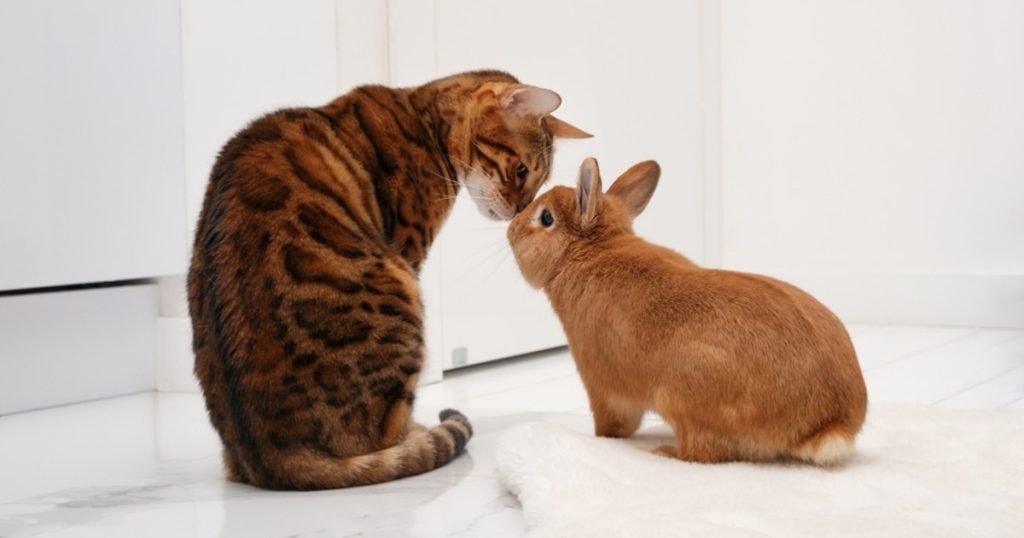
Have you ever wondered if cats and bunnies can live happily under the same roof? You might be thinking about adding a furry friend to your family but worry about how your cat will react to a new bunny companion.
The truth is, their relationship can be surprising—and it all depends on how you introduce them and understand their behaviors. Keep reading to discover what you need to know to help your cat and bunny get along, creating a peaceful and loving home for both.
Cat And Bunny Behavior
Cats and bunnies can live together peacefully with patience and care. Their different behaviors may cause curiosity or caution. Proper introductions help build trust between these unique pets.
Understanding how cats and bunnies interact can be quite fascinating, given their distinct behaviors. If you’re considering having both as pets, it’s crucial to comprehend their natural instincts, social traits, and communication styles. Recognizing these aspects can help create a peaceful and enjoyable environment for both animals.Natural Instincts
Cats are natural predators, and their instincts are hardwired to chase smaller animals. This can pose a challenge when introducing a bunny into the mix. Bunnies, on the other hand, are prey animals and may initially perceive cats as threats. However, domesticated cats often adjust well with positive reinforcement and training. My friend Sarah shared how her cat, Luna, quickly adapted to her bunny, Pepper, after a few monitored interactions. Have you considered how patience can transform these instincts into a harmonious relationship?Social Traits
Cats are known for their independent nature but can also be very social when they choose. They often prefer to interact on their terms. Bunnies are social creatures and thrive on companionship, whether it’s with humans or other animals. Creating shared spaces where both can coexist helps in building mutual trust. Offering treats or toys during their time together can encourage positive interactions. How might you create a shared environment for both your furry companions?Communication Styles
Cats and bunnies communicate in unique ways that can sometimes lead to misunderstandings. Cats use body language, vocalizations, and scent marking, whereas bunnies rely heavily on body language and subtle sounds. Understanding these signals can prevent conflicts. For instance, a bunny thumping its hind legs might signal distress, while a cat’s tail flicking could indicate irritation. Can you imagine how observing these cues can lead to a peaceful coexistence? Creating an environment where cats and bunnies can understand each other’s behaviors is key. With time, patience, and careful observation, your pets can develop a friendly relationship that enriches both their lives and yours.
Credit: www.reddit.com
Factors Influencing Harmony
Creating harmony between cats and bunnies depends on several important factors. Understanding these can help you create a peaceful home where both pets feel safe and comfortable. Let’s look at what really influences their relationship.
Age And Temperament
Young animals tend to be more adaptable and open to new friends. A kitten and a baby bunny are more likely to accept each other than older pets set in their ways. Temperament plays a big role too—calm cats usually get along better with gentle bunnies.
Think about your own pets’ personalities. Is your cat playful or reserved? Does your bunny enjoy being around others or prefer solitude? Matching their energy levels can reduce stress and help them bond.
Early Socialization
Introducing cats and bunnies at an early age can make a huge difference. Pets exposed to different animals early on are less likely to see each other as threats. This can prevent fear or aggression later.
If your pets didn’t grow up together, patience is key. Slow, supervised introductions allow them to get used to each other’s scent and presence safely. Have you tried swapping bedding or toys between them to spark curiosity instead of fear?
Environment Setup
How you arrange your home affects their comfort and safety. Providing separate spaces where each pet can retreat helps them feel secure. This reduces chances of conflict.
- Use barriers like gates or playpens for gradual interaction.
- Offer plenty of hiding spots for both cats and bunnies.
- Keep food and water bowls in separate areas to avoid competition.
Creating a calm environment with controlled introductions often leads to the best results. Could your home setup be inviting both pets to coexist peacefully?
Common Challenges
Bringing cats and bunnies together often sounds charming, but it comes with its own set of challenges. Understanding these common issues helps you create a safer and more peaceful environment for both pets. Let’s look at the main hurdles you might face and how they affect your furry friends.
Prey Drive Issues
Cats are natural hunters, and rabbits can easily trigger their prey instincts. Even a calm cat might suddenly chase or paw at a bunny, causing stress or injury. Observing your cat’s behavior closely is key—do they watch the bunny quietly, or do their eyes track every movement with intense focus?
To manage this, never leave them alone unsupervised at first. Try distraction techniques like toys or treats to redirect your cat’s attention. You might notice your cat calming down over time, but patience is essential.
Territorial Conflicts
Both cats and rabbits can be territorial. Your cat might see the bunny as an intruder, especially if the bunny’s cage or play area is inside the cat’s usual domain. This can lead to hissing, growling, or even aggressive behavior.
Set clear boundaries with separate spaces for each pet. Using baby gates or separate rooms helps, especially during initial introductions. Have you tried swapping their scents by gently rubbing a cloth on each pet and placing it in the other’s area? This can ease territorial tension.
Stress And Anxiety Signs
Stress in cats and bunnies looks different but is equally important to catch early. A stressed cat might hide, groom excessively, or become irritable. Rabbits may thump their back legs, refuse food, or become unusually quiet.
Watch for these signals daily. Creating safe hideouts and keeping a calm environment helps reduce anxiety. How often do you check in on both pets to ensure they feel secure?

Credit: m.youtube.com
Tips For Introducing Cats And Bunnies
Introducing cats and bunnies requires patience and careful planning to ensure both animals feel safe and comfortable. Taking the right steps can prevent stress and build a foundation for a peaceful relationship. Here are some practical tips to help you manage their first encounters effectively.
Safe Introduction Techniques
Start by keeping the cat and bunny in separate rooms with their own scents. Swap bedding or toys between them to help each get used to the other’s smell without direct contact. This reduces anxiety and prepares them for face-to-face meetings.
Use a secure barrier, like a baby gate or a cage, for their first visual introduction. This lets them see and smell each other without any risk of harm. Watch their body language closely to catch signs of curiosity or stress early.
Supervised Interactions
Always supervise any interactions between your cat and bunny until you are confident they can be trusted together. Even a friendly cat may unintentionally scare a timid bunny with sudden movements or pouncing behavior.
Keep initial meetings short, just a few minutes, and gradually increase the time as they become more comfortable. Have treats or toys ready to distract and reward calm behavior during these sessions.
Positive Reinforcement
Reward both pets for calm and gentle behavior with treats, praise, or affection. Positive reinforcement helps them associate each other’s presence with good experiences.
Focus on encouraging curiosity without aggression. If your cat stays calm and your bunny remains relaxed, give them a treat immediately. This builds a positive loop that can lead to a harmonious relationship.
Benefits Of Cat And Bunny Friendship
The friendship between cats and bunnies can bring surprising benefits to your home. When these two different species get along, they create a unique bond that enhances their daily lives and yours. This connection goes beyond simple coexistence and adds real value to their well-being.
Companionship And Play
Both cats and bunnies are social animals who enjoy company. When they become friends, they often engage in playful activities together, keeping each other entertained. Have you noticed how a cat’s curiosity can spark a bunny’s playful side? This interaction reduces boredom and encourages physical activity, which is vital for their health.
Emotional Support
Animals can provide each other with comfort during stressful moments. A bunny snuggling next to a cat can calm anxiety and create a sense of security for both. If your cat or bunny seems lonely, pairing them up might bring emotional relief and strengthen their confidence.
Shared Environment Harmony
When cats and bunnies share a peaceful space, your home feels more balanced. They learn to respect each other’s boundaries, which reduces tension and prevents aggressive behavior. Creating a harmonious environment means less stress for you and more happiness for your pets.

Credit: www.allthingsrabbits.com
When To Seek Expert Help
Knowing when to seek expert help is key to keeping cats and bunnies safe together. Sometimes, challenges arise that need professional attention. Acting early can prevent bigger problems and keep your pets happy.
Behavioral Issues
Signs of stress or aggression between pets need expert advice. Frequent fighting, hissing, biting, or chasing can hurt both animals. Experts help understand why pets behave this way. They suggest ways to improve interactions and reduce tension.
Health Concerns
Illness can affect how cats and bunnies get along. Sudden changes in eating, grooming, or activity might show health problems. A vet can check for infections or injuries. They ensure both animals stay healthy and comfortable.
Professional Training Options
Trainers offer programs to help pets adjust to each other. They use safe methods to teach positive behaviors. Training can include:
- Desensitization to reduce fear
- Controlled introductions
- Reward-based learning
Experts guide pet owners with clear steps to build trust between animals.
Frequently Asked Questions
Do Cats And Bunnies Naturally Get Along?
Cats and bunnies can get along if introduced carefully. Their personalities matter more than species. Supervision is key during early interactions to ensure safety and comfort.
How To Introduce Cats And Rabbits Safely?
Start introductions in a neutral space. Use barriers like cages at first. Allow them to observe each other calmly before direct contact. Always supervise interactions to prevent stress or aggression.
Can Cats Harm Rabbits Accidentally?
Yes, cats may harm rabbits unintentionally during play or hunting instincts. Rabbits are fragile and can get stressed easily. Close supervision and controlled environments reduce risks significantly.
What Signs Show Cats And Bunnies Are Comfortable?
Relaxed body language indicates comfort. Cats purring and rabbits grooming themselves nearby show trust. Lack of hissing, growling, or thumping means positive interactions.
Conclusion
Cats and bunnies can live together peacefully. Careful introduction is the key to success. Watch their behavior closely at first. Give each pet space to feel safe. Over time, they might become friends. Patience and love help build trust. Remember, each animal has its own personality.
Some cats may be more curious than others. Always keep their safety as the top priority. With effort, cats and bunnies can share a happy home.
