

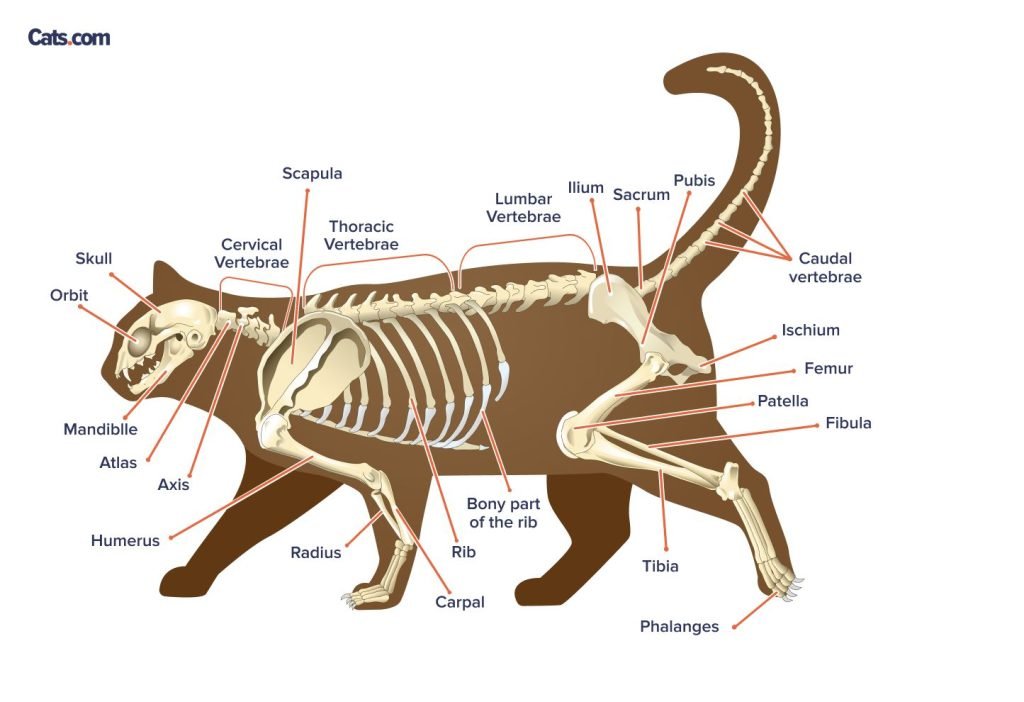
Have you ever wondered how many bones make up your cat’s body? Knowing this surprising fact can help you better understand your furry friend’s incredible flexibility and agility.
Your cat’s skeleton is a fascinating puzzle that holds the key to its graceful movements and playful nature. Keep reading to discover the exact number of bones in a cat and why this matters for your pet’s health and happiness.
You won’t want to miss these eye-opening details!

Credit: en.wikipedia.org
Cat Skeleton Basics
The cat skeleton is a marvel of nature. Built for agility and strength, it supports many activities. From climbing to sprinting, every bone plays a role. Understanding the cat’s skeleton helps us appreciate its abilities.
Total Bone Count
Cats typically have between 230 and 250 bones. The number varies due to tail length. Each bone contributes to a cat’s flexibility. This allows them to leap great heights. Their tails, with many bones, aid in balance.
Comparison With Humans
Humans have 206 bones in their bodies. Cats have more due to their tails. Human bones are larger, supporting bipedal movement. Cats need more bones for their agile, four-legged movement. This difference highlights cats’ unique physical abilities.

Credit: www.purina.com
Flexible Spine And Tail
Cats have a unique spine and tail that give them great flexibility. This flexibility helps them move with grace and balance. Their spine has many small bones, called vertebrae. These bones allow cats to twist and turn easily. The tail also plays an important role in their movement and communication.
Vertebrae Structure
The cat’s spine contains about 53 to 58 vertebrae. This number can vary between cats. These vertebrae are more flexible than in many animals. The spine is divided into sections:
- Cervical (neck)
- Thoracic (upper back)
- Lumbar (lower back)
- Sacral (pelvic area)
- Caudal (tail)
The joints between vertebrae allow a wide range of motion. This gives cats their famous agility. They can arch their backs and squeeze through tight spaces.
Tail Functionality
The tail has about 18 to 23 vertebrae. It is an extension of the spine. Cats use their tail for balance, especially when climbing or running.
The tail also helps in communication. Different tail positions show a cat’s mood. It can signal happiness, fear, or aggression.
In movement, the tail acts like a counterweight. It helps cats keep their balance on narrow surfaces. This makes cats excellent jumpers and climbers.
Paws And Claws Anatomy
The paws and claws of a cat are marvels of natural engineering. They provide balance, agility, and tools for hunting or self-defense. Understanding their anatomy helps you appreciate how cats move so gracefully and interact with their environment.
Toe Bones
Each of a cat’s paws contains multiple small bones known as phalanges. Typically, a cat has five toes on each front paw and four on each back paw. These tiny bones give cats incredible flexibility and control over their movements.
Think about how your cat can silently tiptoe across the room or skillfully grasp toys. The structure of these toe bones makes that possible. They also absorb shock when your cat lands from a jump, protecting joints and muscles.
Claw Mechanism
Cats’ claws are retractable, unlike many other animals. This means they can pull their claws back inside their toes when not in use, keeping them sharp. The mechanism involves tendons and muscles that extend or retract the claws as needed.
Have you noticed your cat’s claws suddenly pop out when it’s excited or hunting? This action helps them grip surfaces or prey securely. Understanding this can help you handle your cat more gently and know why they sometimes scratch furniture or skin.

Credit: www.petscare.com
Bone Growth And Development
Understanding how a cat’s bones grow and develop helps you appreciate their flexibility and agility. Bone growth is a dynamic process that starts right after birth and continues until your feline friend reaches adulthood. This journey from soft cartilage to strong bones is critical for their overall health and movement.
Kitten Bone Formation
When kittens are born, many of their bones are still soft and made mostly of cartilage. This allows for rapid growth and flexibility as they explore the world around them. Over time, this cartilage slowly turns into bone through a process called ossification.
Did you know that a kitten’s skeleton can grow up to three times its original length in just a few months? This rapid development requires good nutrition, especially calcium and phosphorus, to build strong bones. Without proper care, you might notice your kitten developing weak or brittle bones, which can affect their ability to jump or run.
Adult Bone Density
As cats mature, their bones become denser and stronger. This increased bone density supports their active lifestyle and helps protect them from injuries. Unlike humans, cats maintain a relatively high bone density throughout their adult life, which contributes to their impressive balance and agility.
Have you ever wondered why your cat can land gracefully from a high jump? It’s partly because their bones are designed to absorb impact efficiently. Ensuring your cat stays active and receives a balanced diet helps maintain this bone strength and keeps them moving confidently well into their senior years.
Unique Bone Features
Cats have special bones that help them move and sense the world. These unique bones give cats their agility and sharp senses. Understanding these bones reveals why cats are such skilled hunters and explorers.
Floating Clavicle
The floating clavicle is a small bone that is not attached to other bones. This bone allows cats to squeeze through tight spaces. It also helps them jump and run with great flexibility. Unlike humans, cats do not have a rigid collarbone. This makes their front legs more mobile and agile.
Whisker Support Bones
Cats have tiny bones at the base of their whiskers. These bones support the whiskers and connect them to muscles. Whiskers act like sensors for cats, helping them measure space and detect movement. The support bones make whiskers strong and sensitive. This helps cats navigate in the dark and hunt with precision.
Common Bone Injuries
Cats are agile creatures, but their bones are not immune to injuries. Common bone injuries in cats often result from accidents like falls or rough play. Understanding these injuries helps you provide better care and spot problems early.
Fractures And Healing
Fractures occur when a cat’s bone breaks partially or completely. You might notice swelling, limping, or your cat avoiding putting weight on a leg. Some fractures are simple, healing with rest and immobilization, while others need surgery.
Healing time varies, often taking several weeks. During this period, your cat needs limited movement to avoid worsening the injury. Regular vet check-ups ensure the bone is healing correctly and catch any complications early.
Preventive Care Tips
Preventing bone injuries is easier than treating them. Keep your cat indoors or supervise outdoor time to reduce the risk of falls and fights. Provide a safe environment with soft landing spots if your cat loves jumping from heights.
Nutrition plays a key role too. A diet rich in calcium and vitamin D strengthens bones and supports recovery if injuries happen. Regular exercise keeps muscles strong, which protects bones from damage.
Have you ever considered how your home layout might affect your cat’s safety? Small changes can make a big difference in preventing injuries.
Frequently Asked Questions
How Many Bones Does An Average Cat Have?
An average cat has around 230 to 250 bones. The exact number varies due to tail length and breed differences. Cats have more bones than humans, which helps their flexibility and agility.
Why Do Cats Have More Bones Than Humans?
Cats have more bones because of their flexible spine and tail. These extra bones aid in balance, jumping, and quick movements. Their unique skeletal structure supports their hunting and climbing skills.
Can A Cat’s Bone Count Change With Age?
No, a cat’s bone count remains constant after birth. The number of bones is fixed, but growth and development strengthen them. Bone health depends on nutrition, not the number of bones.
How Does A Cat’s Bone Structure Aid Its Agility?
A cat’s flexible spine and many small bones help it twist and jump. This structure allows them to squeeze through tight spaces and land safely. Their bone arrangement supports quick, graceful movements.
Conclusion
Cats have about 230 to 250 bones in their bodies. This number can vary slightly with each cat. Their flexible bones help them jump and move with ease. Knowing this helps us understand their unique body structure. It also shows why cats are such great climbers and hunters.
Their bones support their agility and balance. Caring for their bones means keeping them healthy and active. A strong skeleton is key to a happy cat. Remember, every cat’s body is special in its own way.
