

Have you ever wondered what makes your cat’s tail so flexible and expressive? You might be asking yourself, “Do cats have bones in their tails?” Understanding the structure of your cat’s tail can help you appreciate how they balance, communicate, and move with such grace.
If you’re curious about what’s inside that fluffy tail and how it works, keep reading—because the answer might surprise you and change the way you see your feline friend forever.
Cat Tail Anatomy
The anatomy of a cat’s tail is more complex than you might think. It’s not just a fluffy appendage that twitches when your cat is curious or annoyed. Understanding what makes up the tail can help you better interpret your cat’s behavior and health.
Structure Of The Tail
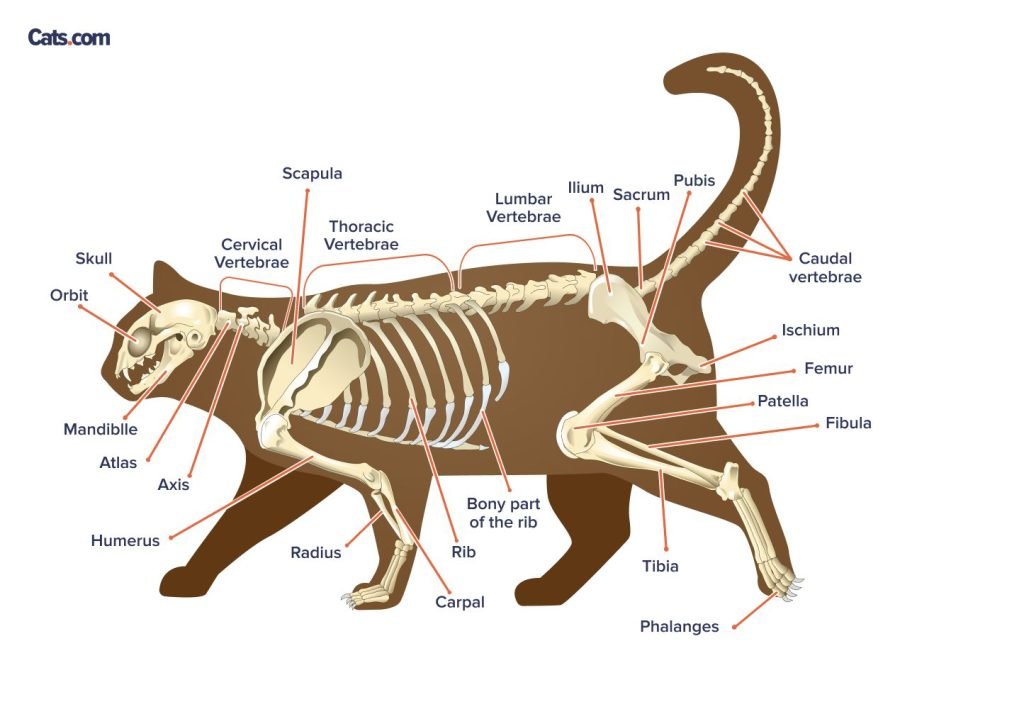
Your cat’s tail is made up of multiple parts working together seamlessly. It contains muscles, nerves, blood vessels, and skin, all surrounding a core of small bones called vertebrae. The tail’s length varies among breeds, but its basic structure remains consistent.
Think about how flexible your cat’s tail is when it wraps around your arm or flicks in excitement. This flexibility comes from the combination of bones and soft tissues. Without the bones, the tail would be floppy and lack the precise control cats are famous for.
Role Of Vertebrae
Each cat tail contains between 19 and 23 tiny vertebrae. These bones provide the framework and support needed for movement. They act like a spine for the tail, allowing it to bend, twist, and balance your cat’s body.
These vertebrae are connected by joints and cushioned by cartilage, which prevents damage during quick movements. If you’ve ever seen a cat flick its tail sharply, you’ve witnessed the vertebrae in action. Without these bones, your cat couldn’t use its tail to communicate or balance effectively.

Credit: www.aol.com
Functions Of A Cat’s Tail
The tail is more than just a furry extension of your cat’s body. It plays several important roles that impact how your cat moves and interacts with the world around them. Understanding the functions of a cat’s tail can give you deeper insight into your feline friend’s behavior and physical abilities.
Balance And Coordination
Your cat’s tail acts like a natural counterweight. When your cat leaps or runs, the tail helps maintain balance by adjusting its position in mid-air. This is why cats can land gracefully after high jumps or sudden twists.
Think about the last time you saw a cat walking on a narrow fence or a ledge. Their tail moves constantly to keep them steady. Without this built-in balancing tool, your cat would struggle with coordination and agility.
Communication And Expression
Have you noticed how a cat’s tail changes during different moods? It’s a powerful tool for expressing feelings without words. A tail held high often signals confidence or happiness, while a puffed-up tail can mean fear or aggression.
Understanding these subtle signals can improve your relationship with your cat. For example, a flicking tail might mean irritation, warning you to give your cat some space. Paying attention to tail movements helps you respond better to your cat’s needs and emotions.
Common Misconceptions
There are many ideas floating around about cats’ tails, especially regarding their structure and function. These common misconceptions can shape how you understand your cat’s behavior or care for it. Clearing up these misunderstandings helps you better appreciate the true nature of your feline friend’s tail.
Myths About Flexibility
Many people believe a cat’s tail is incredibly flexible because it’s made mostly of muscle or cartilage. In reality, the tail contains a series of small bones called vertebrae, connected by joints and surrounded by muscles and ligaments. This bony structure provides both support and flexibility, allowing the tail to move in various directions but not bend like rubber.
Have you noticed your cat twitching or curling its tail? That movement isn’t just random; it helps with balance and communication. Understanding that bones play a key role in this movement can change how you view tail gestures during play or rest.
Misunderstandings About Sensitivity
It’s easy to assume a cat’s tail is highly sensitive because it reacts quickly to touch or environmental changes. While the tail does have nerves and is sensitive, it’s not more sensitive than other parts of the cat’s body, like the whiskers or paw pads. The sensitivity helps cats detect balance shifts or express emotions but doesn’t mean the tail is fragile.
If you’ve ever gently touched your cat’s tail and seen a quick flick or twitch, you might think it’s a sign of pain. Often, it’s just a reflex or a way for your cat to communicate discomfort or irritation. Knowing this can help you read your cat’s body language more accurately without overreacting.
Health Issues Related To Tails
Your cat’s tail is more than just a fluffy extension; it’s a vital part of their body that helps with balance, communication, and movement. Because tails contain bones and nerves, health issues can arise if the tail suffers an injury or other problems. Knowing what to look for can help you protect your furry friend and keep their tail healthy and pain-free.
Injuries And Fractures
Cat tails can get injured in many ways—being caught in doors, hit by cars, or even rough play with other pets. Since tails have small bones called vertebrae, these bones can break or get fractured. A broken tail bone can cause swelling, bleeding, or even paralysis of the tail.
In my experience, a neighbor’s cat once came home with a swollen, limp tail after being stuck in a fence. Quick veterinary care helped save the tail from permanent damage. You should never ignore a tail injury, as untreated fractures can lead to infections or long-term problems.
Signs Of Pain Or Discomfort
How can you tell if your cat’s tail is hurting? Watch for signs like constant licking or biting of the tail, reluctance to move or wag it, or unusual posture. Your cat might also show changes in behavior, such as hiding more or becoming irritable.
- Swelling or bruising on the tail
- Tail hanging limp or dragging on the floor
- Sudden yelping or vocalizing when the tail is touched
Have you noticed your cat acting differently around their tail? Paying close attention to these signals can help you catch problems early. If your cat shows any of these symptoms, a vet visit is essential to diagnose and treat the issue before it worsens.
Interesting Tail Facts
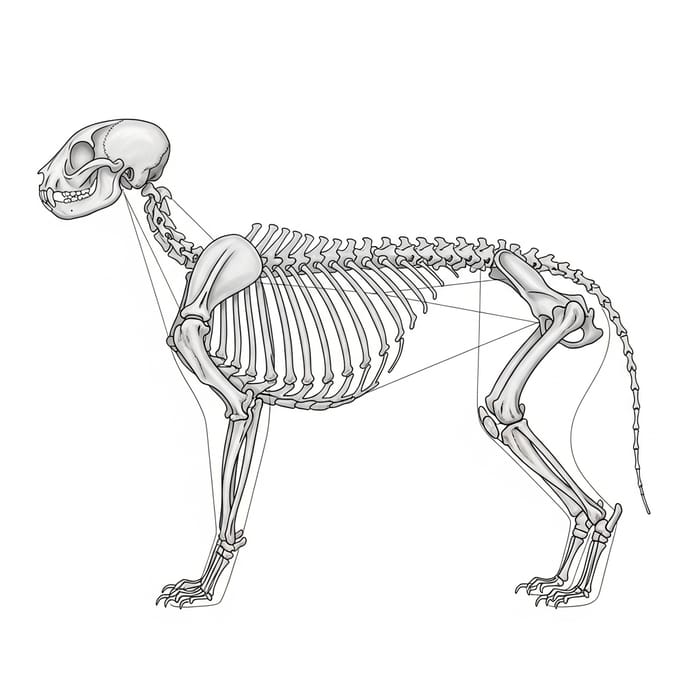
Cats’ tails are full of surprises. They do have bones inside, but there is much more to learn about these flexible appendages. The tail helps cats balance and communicate. It also shows their mood and personality.
Here are some interesting facts about cat tails that reveal their uniqueness and importance.
Unique Tail Patterns
Each cat’s tail has a distinct pattern and color. Some tails are striped like a raccoon’s. Others have spots or are solid-colored. These patterns help identify cats and show their breed traits.
Patterns can change with age. Kittens often have softer, less distinct markings. Adult cats develop bolder and clearer tail designs.
Some cats have short or kinked tails. These tails still have bones but are shaped differently. The variety adds to the charm of each cat.
Tail Movements And Their Meanings
Cats use their tails like a language. Different movements tell us how they feel.
- A high tail means a happy and confident cat.
- A twitching tip shows curiosity or mild irritation.
- A low or tucked tail signals fear or submission.
- Rapid swishing can mean excitement or annoyance.
- A puffed-up tail means the cat feels threatened or scared.
Watching a cat’s tail gives clues about its mood. It helps owners understand their pets better.
Credit: easy-peasy.ai

Credit: www.petscare.com
Frequently Asked Questions
Do Cats Have Bones Inside Their Tails?
Yes, cats have bones inside their tails. Their tails contain small, flexible vertebrae called caudal vertebrae. These bones provide structure and help with balance and movement.
How Many Bones Are In A Cat’s Tail?
A cat’s tail has between 18 to 23 small bones. These bones vary depending on the cat’s breed and tail length. They form a flexible, mobile structure for communication and balance.
Why Is A Cat’s Tail Important?
A cat’s tail helps with balance, communication, and body language. It acts as a counterbalance when cats jump or climb. The tail also signals mood and feelings to other animals.
Can A Cat’s Tail Break Like Human Bones?
Yes, a cat’s tail can break. Tail fractures often happen due to accidents or injuries. Prompt veterinary care is essential to ensure proper healing and avoid complications.
Conclusion
Cats have bones in their tails that help them move and balance. Their tail bones are small but strong. These bones allow cats to twist and turn easily. A cat’s tail is important for communication too. It shows how a cat feels.
Understanding the tail helps us learn more about cats. Now you know why a cat’s tail is more than just fur. It plays a key role in their daily life. Cats truly have amazing tails!
