

Are you wondering how many shots your cat really needs to stay healthy? Keeping your furry friend safe is important, but it can get confusing with so many vaccines out there.
You want to protect your cat without overdoing it. This article will clear up the mystery and give you simple, clear answers. By the end, you’ll know exactly what shots are essential and why they matter for your cat’s well-being.
Keep reading to make the best choices for your beloved pet.
Core Vaccinations
Core vaccinations protect your cat from serious and often deadly diseases. These vaccines are essential regardless of your cat’s lifestyle or age. Keeping your cat’s shots up to date can save you from unexpected vet bills and heartache later.
Feline Viral Rhinotracheitis
This vaccine defends against a common respiratory infection caused by feline herpesvirus. Cats with this virus often suffer from sneezing, eye discharge, and nasal congestion. Regular vaccination helps reduce the severity and spread of this illness in your home.
Calicivirus
Calicivirus is another respiratory disease that can cause mouth ulcers and difficulty eating. It spreads quickly among cats, especially in multi-cat households. Vaccinating your cat minimizes outbreaks and keeps their mouth healthy and pain-free.
Panleukopenia
Also known as feline distemper, panleukopenia is a highly contagious and often fatal disease. It attacks your cat’s immune system, causing severe vomiting and diarrhea. Vaccination offers strong protection and is critical for every cat’s health.
Rabies
Rabies is fatal and can affect humans too, making this vaccine legally required in many areas. It spreads through bites from infected animals and is preventable with timely shots. Ensuring your cat receives the rabies vaccine protects your entire family.

Credit: millsanimalhospital.com
Non-core Vaccinations
Non-core vaccinations protect cats against diseases based on their lifestyle and environment. These vaccines are not required for all cats but are important for those exposed to specific risks. Your veterinarian can help decide which non-core vaccines suit your cat’s needs.
Feline Leukemia Virus
Feline Leukemia Virus (FeLV) spreads through close contact or shared food bowls. Cats living outdoors or with other cats should get this vaccine. It helps prevent a serious illness that weakens the immune system. The vaccine is given in a series of shots and may require boosters.
Feline Immunodeficiency Virus
Feline Immunodeficiency Virus (FIV) affects the immune system and is often caught through bites. Cats that go outside or fight with other cats benefit from this vaccine. The shots reduce the risk but do not fully prevent the disease. Regular vet check-ups remain important after vaccination.
Chlamydophila Felis
Chlamydophila Felis causes eye infections and respiratory problems. It spreads easily in multi-cat homes or shelters. This vaccine helps reduce symptoms and the chance of spreading. Cats in crowded or high-risk areas should get vaccinated to stay healthy.
Bordetella
Bordetella causes respiratory illness similar to a cold. It spreads quickly among cats in close contact. Boarding facilities and catteries often recommend this vaccine. It helps protect your cat from coughing and sneezing caused by the bacteria. The vaccine may be given as a nasal spray or injection.
Kitten Vaccination Schedule
Keeping kittens healthy starts with a clear vaccination schedule. Vaccines protect them from many serious diseases. Following the right timing helps build strong immunity. Each vaccine dose plays an important role. Understanding when to start and how to continue is key for every kitten owner.
Initial Vaccination Timing
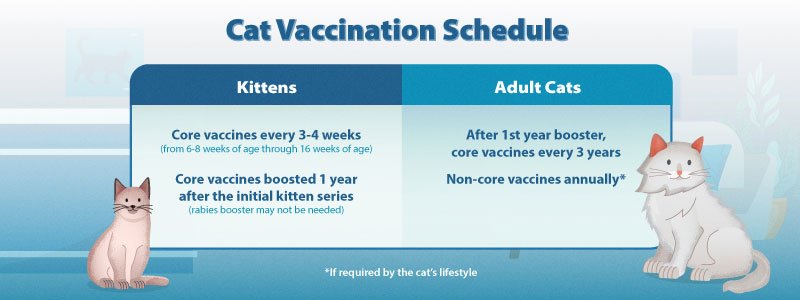
Kittens usually get their first shots at six to eight weeks old. This is when their protection from mother’s antibodies begins to fade. Early vaccines target common diseases like feline distemper and respiratory infections. Vets may also recommend vaccines for feline leukemia depending on risk. It is important to start vaccinations on time for best results.
Booster Shots
After the first round, booster shots follow every three to four weeks. This continues until the kitten is about 16 weeks old. Boosters strengthen the immune response and ensure lasting protection. Missing boosters can leave kittens vulnerable to illness. After the initial series, adult cats need boosters yearly or every three years, based on vaccine type.
Adult Cat Vaccination Schedule
Adult cats need vaccinations to stay healthy throughout their lives. The adult cat vaccination schedule helps protect cats from common diseases. This schedule varies based on the cat’s age, health, and lifestyle. Regular vaccines strengthen the cat’s immune system and reduce illness risks. Owners should follow a clear vaccination plan for their adult cats. This plan includes initial vaccines and ongoing boosters.
Annual Boosters
After the first year, most cats need yearly booster shots. These boosters keep immunity strong against diseases. Common vaccines include:
- Feline herpesvirus
- Calicivirus
- Panleukopenia (distemper)
- Rabies
Some vaccines may last longer, but annual checkups are vital. The vet checks the cat’s health and updates shots as needed. Skipping boosters can leave cats vulnerable to illness.
Lifestyle Considerations
Vaccination needs depend on the cat’s lifestyle. Indoor cats may need fewer vaccines than outdoor cats. Outdoor cats face more risks from other animals and the environment. Cats that travel or live with other pets also need extra protection.
Discuss your cat’s lifestyle with your vet. The vet can tailor the vaccine schedule to fit your cat’s needs. This ensures your cat gets the right vaccines at the right time.
Vaccination Side Effects
Vaccinations protect cats from many dangerous diseases. Like any medical treatment, vaccines can cause side effects. Most side effects are mild and short-lived. Knowing what to expect helps cat owners stay calm and prepared.
Common Reactions
- Mild fever and tiredness for a day or two
- Soreness or swelling at the injection site
- Loss of appetite for 24 hours
- Sneezing or mild nasal discharge if given nasal vaccines
These reactions show the immune system is working. They usually disappear within a few days without treatment.
When To Contact A Vet
- Swelling grows larger or becomes very hard
- Breathing becomes difficult or noisy
- Vomiting or diarrhea lasts more than 24 hours
- Sudden weakness or collapse
- Hives or severe itching
These signs might mean a serious allergic reaction. Seek veterinary help immediately to keep your cat safe.
Credit: www.whiskas.com.ph
Choosing A Veterinarian
Choosing the right veterinarian for your cat’s vaccinations is crucial. This decision impacts not only the quality of care your cat receives but also your peace of mind. You want someone knowledgeable, approachable, and reliable to handle your cat’s health needs.
Credentials And Experience
Look for a veterinarian with proper credentials and a solid track record in feline care. Certifications from recognized veterinary associations ensure they have the necessary training.
Experience matters too. A vet who regularly vaccinates cats will be more familiar with potential reactions and how to manage them effectively.
Ask about their approach to vaccinations. Do they personalize the schedule based on your cat’s age, lifestyle, and health status? This shows they care about your cat’s specific needs.
Cost And Location
Vaccination costs can vary widely, so it’s smart to compare prices without sacrificing quality. Some vets offer package deals or discounts for multiple shots, which can save you money.
Consider the clinic’s location as well. A nearby vet means less stress for your cat during visits and quicker access in case of emergencies.
Is the clinic’s environment cat-friendly? A calm, clean space can make a big difference in how your cat handles visits.
Myths About Cat Vaccinations
Vaccinating your cat is essential for keeping them safe from many serious diseases. Yet, there are several myths that make pet owners hesitate or question the vaccination process. Understanding these misconceptions helps you make informed decisions about your cat’s health and avoid unnecessary worries.
Over-vaccination Concerns
Many people worry that giving too many shots can harm their cat. While it’s true that vaccines should be given responsibly, veterinarians follow strict guidelines to avoid over-vaccination.
Each vaccine is designed to protect against specific diseases, and booster shots are timed to maintain immunity. Skipping vaccines because of fear might leave your cat vulnerable to preventable illnesses.
Think about your own health—would you skip a booster for a disease that could seriously affect you? Your cat’s immune system needs similar protection to stay strong.
Natural Immunity Misconceptions
Some owners believe their cat’s natural immunity is enough to protect them without vaccines. While cats do have immune defenses, natural exposure to diseases can be risky and sometimes fatal.
Vaccines help train the immune system safely without causing disease. Relying solely on natural immunity is like gambling with your cat’s health.
Ask yourself: is it worth risking your cat’s life to avoid a few shots? Vaccinations offer a safer way to build strong, lasting immunity.
Credit: www.goodrx.com
Frequently Asked Questions
How Many Shots Does A Cat Usually Need?
A cat typically needs 3 to 4 core vaccine shots initially. These include rabies, FVRCP, and sometimes FeLV vaccines. Follow-up boosters are given annually or every three years, depending on the vaccine and vet’s advice.
When Should Kittens Start Their Vaccinations?
Kittens should start vaccinations at 6 to 8 weeks old. This early start builds immunity against common feline diseases. Follow-up shots are given every 3 to 4 weeks until 16 weeks old for full protection.
Are Booster Shots Necessary For Adult Cats?
Yes, booster shots are essential for adult cats. They maintain immunity against diseases like rabies and distemper. Your vet will recommend boosters based on your cat’s health, lifestyle, and local regulations.
What Vaccines Are Essential For All Cats?
Core vaccines for cats include FVRCP and rabies. These protect against feline viral rhinotracheitis, calicivirus, panleukopenia, and rabies. Non-core vaccines depend on risk factors and vet recommendations.
Conclusion
Cats need several shots to stay healthy and safe. Kittens usually get their first vaccines at six to eight weeks old. They need booster shots every few weeks until about 16 weeks old. Adult cats require yearly vaccines to keep protection strong.
Talk with your vet to know exactly which shots your cat needs. Vaccinating your cat helps prevent serious diseases. It also supports a long and happy life for your furry friend. Regular shots are a small step with big benefits.
Keep your cat’s health a top priority.
