


Are you wondering if your cat really needs shots every year? Keeping your furry friend healthy is important, but vaccine schedules can be confusing.
You want to protect your cat from serious diseases without overdoing it. You’ll discover why yearly shots might be necessary—or when they might not be. By the end, you’ll feel confident making the best choices for your cat’s health. Keep reading to learn what every cat owner should know about vaccinations.
Importance Of Vaccinations
Vaccinations play a crucial role in keeping cats healthy. They protect cats from serious diseases that can be fatal or cause long-term health problems. Regular vaccines help build immunity, reducing the chance of infections spreading.
Without vaccines, cats face higher risks of catching illnesses from other animals or the environment. Vaccinations also protect other pets and people by lowering the spread of contagious diseases.
Protecting Against Common Cat Diseases
Vaccines shield cats from several common diseases such as feline distemper, feline leukemia, and rabies. These illnesses can cause severe symptoms or death. Vaccination provides a safe way to prevent these diseases effectively.
Maintaining Long-term Health
Annual shots help maintain immunity over time. Some vaccines lose their effectiveness after several months. Yearly boosters ensure cats stay protected throughout their lives.
Reducing Veterinary Costs
Treating serious illnesses is often costly and stressful. Vaccinating cats prevents diseases that may require expensive medical care. Preventive care saves money and keeps cats comfortable.
Community And Public Health
Vaccinating cats helps protect the broader community. It reduces the chance of disease outbreaks that could affect other animals and humans. Responsible vaccination supports a healthier environment for all.
Credit: medium.com
Core Vs. Non-core Vaccines
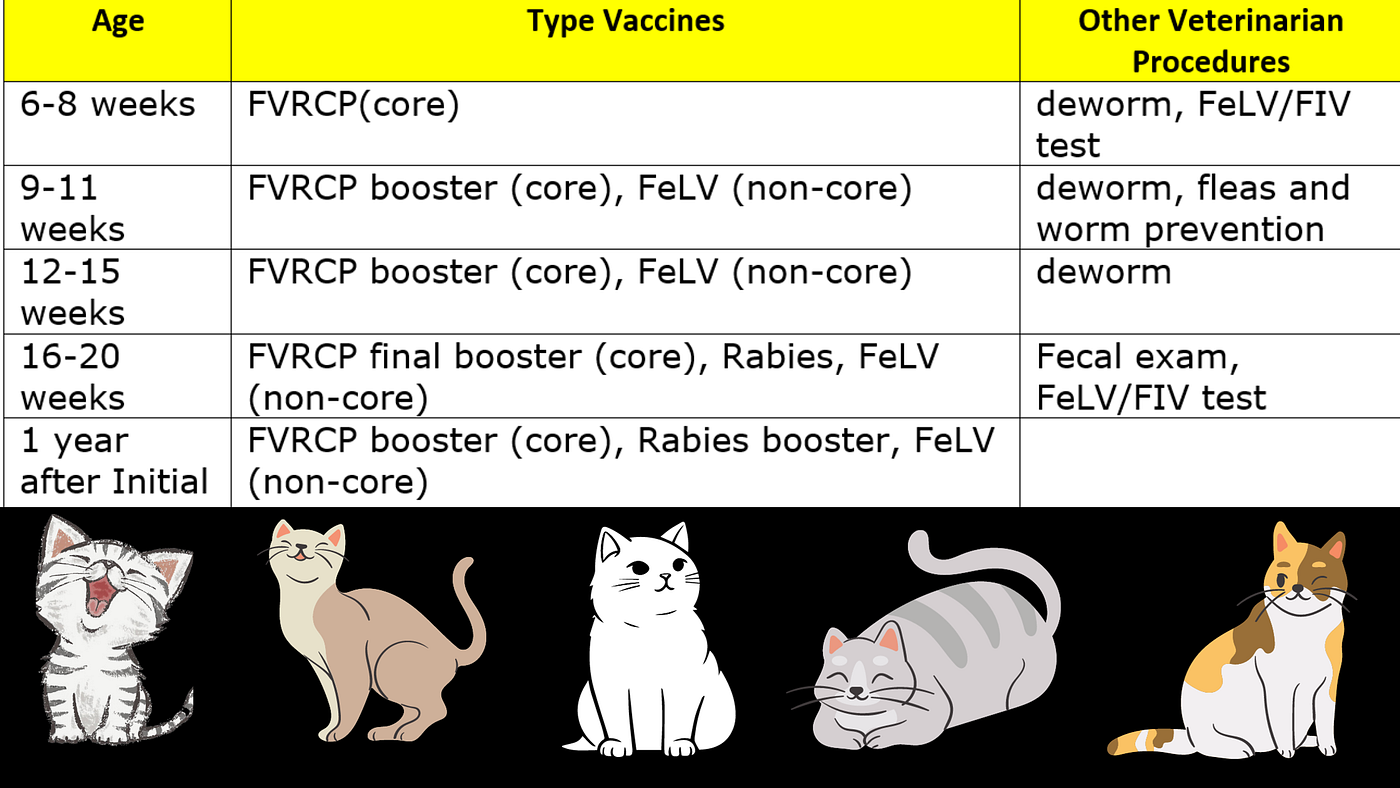
Understanding the difference between core and non-core vaccines helps pet owners protect their cats effectively. Core vaccines are essential for every cat’s health. Non-core vaccines depend on the cat’s lifestyle and risk factors. Knowing which vaccines belong to each category guides proper vaccination schedules.
Core Vaccines Explained
Core vaccines protect cats from serious diseases common in all areas. These vaccines are recommended for every cat. They include protection against:
- Feline Panleukopenia (distemper)
- Feline Herpesvirus (respiratory infection)
- Feline Calicivirus (respiratory illness)
- Rabies (fatal viral disease)
These diseases spread easily and can be deadly. Core vaccines keep cats safe and healthy. Vets advise giving these shots regularly to maintain immunity.
Non-core Vaccines And Their Necessity
Non-core vaccines target diseases that affect only some cats. They depend on the cat’s environment and activities. Examples include:
- Feline Leukemia Virus (FeLV)
- Bordetella (respiratory infection)
- Chlamydia felis (eye infection)
Cats who go outdoors or live with other cats may need these vaccines. Indoor cats with little contact often do not require them. A vet evaluates each cat’s risk before recommending non-core shots.
Annual Vaccination Needs
Cats require vaccines to protect them from serious diseases. Annual vaccination helps maintain their immunity. Not all cats need the same vaccines every year. The schedule depends on many factors. Staying updated with vaccines keeps cats healthy and safe.
Factors Influencing Vaccine Schedules
Age plays a big role in vaccine timing. Kittens need more shots at first. Adult cats may need boosters less often. Indoor cats face fewer risks than outdoor cats. Cats with health problems may need special care. The type of vaccines also matters. Some vaccines last longer than others.
Veterinarian Recommendations
Veterinarians assess each cat individually. They suggest vaccine plans based on lifestyle and health. Regular check-ups help vets decide on vaccine needs. Vets also monitor for side effects or reactions. Following vet advice ensures proper vaccine protection. Trusting the vet keeps your cat safe.
Risks Of Over-vaccination
Vaccinations are essential to keep your cat healthy, but giving shots too often can cause problems. Over-vaccination means your cat receives vaccines more frequently than necessary, which might lead to unwanted health risks. It’s important to understand these risks so you can make the best choices for your pet’s well-being.
Potential Side Effects
Too many vaccines can trigger side effects, ranging from mild to severe. Common reactions include swelling at the injection site, mild fever, or lethargy lasting a day or two. However, some cats may develop more serious issues like allergic reactions, persistent lumps, or autoimmune diseases.
I once had a friend whose cat received annual shots without a vet’s recommendation. Over time, the cat developed a painful lump where the vaccine was given, requiring surgery. This shows why it’s crucial to avoid unnecessary vaccinations and discuss your cat’s specific needs with your vet.
Monitoring And Managing Reactions
After vaccination, watch your cat closely for any unusual symptoms. Keep an eye out for signs like vomiting, difficulty breathing, or swelling beyond the injection site. These could indicate a serious allergic reaction needing immediate veterinary care.
To protect your cat, ask your vet about the best vaccination schedule tailored to their lifestyle and health status. If your cat has had previous reactions, your vet might suggest spacing out shots or using different vaccine types. Staying informed and proactive helps you manage your cat’s health effectively.
Alternatives To Annual Shots
Not all cats need shots every year. Some alternatives help decide if your cat really needs a vaccine. These options focus on your cat’s health and immunity without yearly vaccinations.
Titer Testing
Titer testing measures the antibodies in your cat’s blood. It shows if your cat still has protection from past vaccines. Vets use this test to decide if a booster shot is necessary. This way, your cat avoids unnecessary vaccines. Titer testing is a safe and effective way to track immunity.
Holistic Approaches
Holistic care supports your cat’s immune system naturally. It includes good nutrition, clean water, and stress reduction. Herbal supplements and natural remedies may also help. Regular exercise and a clean environment keep cats healthy. Holistic methods work alongside veterinary care to reduce vaccine needs.
Credit: www.prameyanews.com
Legal Requirements And Guidelines
Understanding the legal requirements around cat vaccinations is crucial for every pet owner. These rules not only protect your cat’s health but also help prevent the spread of diseases in your community. Knowing what laws apply can save you from unexpected fines or complications.
State And Local Regulations
Each state and even local areas may have different vaccination laws for cats. Most places require at least a rabies shot by law because rabies is a serious health threat to humans and animals alike.
Some states demand annual boosters, while others allow a three-year vaccine. It’s important to check your local animal control or health department websites to see what applies where you live.
Have you ever wondered why your neighbor’s cat has a different vaccination schedule? It often comes down to these local rules, which can vary widely.
International Travel Requirements
Traveling internationally with your cat means meeting the destination country’s vaccination rules. Many countries require proof of current vaccinations, especially rabies, before allowing pets to enter.
Some countries also ask for additional vaccines or health certificates issued shortly before travel. Without these, your cat might face quarantine or even be denied entry.
Planning ahead is key. Have you checked the pet travel guidelines for your destination yet? Missing this step can cause major travel headaches.
Consulting Your Veterinarian
Talking to your veterinarian is the best way to decide if your cat needs shots every year. Every cat is different, and your vet knows what’s best based on your cat’s health and lifestyle. This personalized advice helps keep your furry friend safe without unnecessary visits or vaccines.
Personalized Health Plans
Your vet can create a health plan tailored just for your cat. They consider factors like age, breed, and risk of exposure to diseases. For example, an indoor cat may need fewer vaccines than one that spends time outside.
By discussing your cat’s routine and environment, your vet can suggest which shots are essential and how often to get them. This plan evolves as your cat grows, ensuring protection without overdoing it.
Regular Health Check-ups
Yearly check-ups are a perfect time to review your cat’s vaccine needs. During these visits, vets assess your cat’s overall health and spot any new risks.
You might not realize a small change in your cat’s behavior or environment that affects their vaccine schedule. Regular visits help catch these details early and adjust the plan accordingly.
Credit: www.catcarehospital.com
Frequently Asked Questions
How Often Do Cats Need Vaccination Shots?
Cats typically need vaccination shots annually or every three years, depending on the vaccine type and vet advice.
Why Are Annual Cat Vaccinations Important?
Annual vaccinations protect cats from serious diseases and keep their immune system strong and healthy.
Can Indoor Cats Skip Yearly Shots?
Indoor cats still need yearly shots to prevent diseases that can enter through visitors or other pets.
What Vaccines Do Cats Need Every Year?
Core vaccines include rabies, feline distemper, and respiratory viruses, usually administered yearly or as recommended by vets.
Conclusion
Cats need regular shots to stay healthy and safe. Vaccines protect them from serious diseases. Some shots require yearly updates, while others last longer. Talk with your vet to create the best plan for your cat. Keeping up with vaccines helps prevent illness and keeps your pet happy.
A healthy cat means a happy home. Don’t skip their shots—they matter more than you think. Simple steps like this keep your cat safe every year.
