

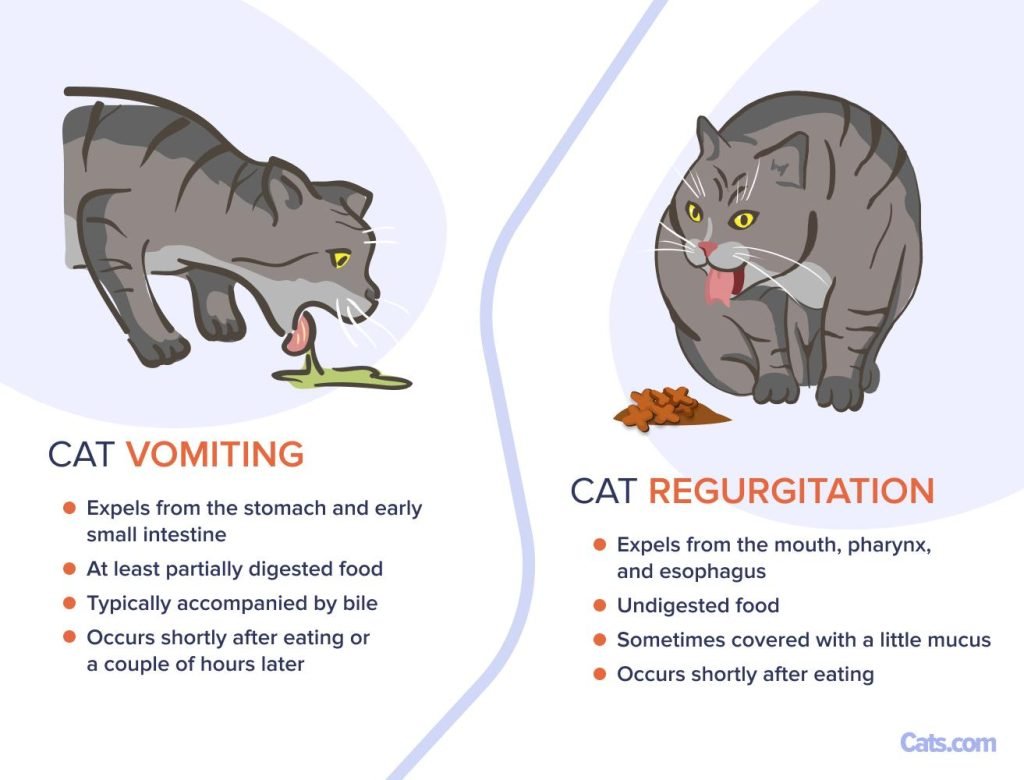
Have you ever watched your cat happily eat, only to see them suddenly throw up right afterward? It’s confusing and worrying, isn’t it?
You might wonder if something is seriously wrong or if this is just a normal part of being a cat. Understanding why your furry friend throws up after eating can help you keep them healthier and happier. You’ll discover the surprising reasons behind this common behavior and what you can do to help your cat feel better.
Keep reading—you’ll want to know these important facts to protect your beloved pet.
Common Causes Of Cat Vomiting
Vomiting in cats is a common issue that worries many pet owners. Understanding why cats throw up after eating helps in managing their health. Various factors can cause vomiting, from eating habits to medical problems. Identifying the cause is important for proper care and treatment.
Eating Too Quickly
Cats that eat very fast often swallow air with their food. This can upset their stomach and cause vomiting soon after eating. Eating quickly may also lead to choking or gagging. Slow feeder bowls or smaller, frequent meals can help prevent this problem.
Dietary Indiscretion
Cats sometimes eat things they should not, like spoiled food or plants. This can irritate their stomach and cause vomiting. Curiosity and hunting instincts often lead cats to eat unusual items. Keeping harmful foods and objects out of reach reduces this risk.
Hairballs And Grooming
Cats groom themselves by licking fur, which they swallow. This fur can form hairballs in their stomach. When hairballs become large, cats may vomit to clear them out. Regular brushing helps reduce loose fur and hairballs.
Food Allergies And Intolerances
Some cats react badly to certain ingredients in their food. Allergies or intolerances can cause vomiting, diarrhea, or itching. Common triggers include dairy, wheat, and certain proteins. Switching to hypoallergenic or limited ingredient diets can ease symptoms.
Underlying Medical Conditions
Health issues like infections, kidney disease, or parasites may cause vomiting. Chronic vomiting needs veterinary attention to find the root cause. Early diagnosis and treatment improve a cat’s quality of life and prevent complications.
How Eating Habits Affect Vomiting
Cats’ eating habits greatly influence their chances of vomiting. The way they eat, what they eat, and their feeding setting all play key roles. Understanding these factors helps reduce vomiting episodes and keeps cats healthier.
Portion Size And Frequency
Feeding large portions at once can cause cats to vomit. Cats eating too fast often swallow air, which irritates their stomach. Smaller, more frequent meals help prevent overeating and reduce vomiting risk. Dividing daily food into several portions controls intake better and eases digestion.
Type Of Food Offered
Some foods are harder for cats to digest. Rich or fatty foods often upset their stomach. Sudden changes in diet can also cause vomiting as the digestive system adjusts. Choosing high-quality, easily digestible food supports stomach health and lowers vomiting chances.
Feeding Environment
A stressful or noisy environment can affect cats’ eating habits. Cats may eat too quickly or refuse to eat in uncomfortable settings. A calm, quiet place encourages slow, relaxed eating. This reduces the chance of vomiting and promotes better digestion overall.
Recognizing Serious Symptoms
Vomiting in cats after eating can be common. Yet, it is important to spot serious signs early. Some symptoms mean a visit to the vet is urgent. Recognizing these signs helps protect your cat’s health quickly.
When To Seek Veterinary Care
Seek veterinary care if your cat vomits often or violently. Vomiting that lasts more than 24 hours needs attention. Watch for blood or unusual colors in vomit. Sudden loss of appetite with vomiting is a red flag. Weakness or difficulty standing shows serious problems. Also, if your cat shows signs of pain or distress, get help fast.
Signs Of Dehydration And Illness
Vomiting can cause dehydration, which is dangerous. Check your cat’s gums; dry or sticky gums indicate dehydration. Skin that stays lifted after pinching is another sign. Your cat may also seem tired or less active. Shivering or a high fever points to illness. Keep an eye on breathing; fast or labored breathing is serious.

Credit: www.reddit.com
Preventing Vomiting After Meals
Vomiting after meals is a common issue many cat owners face. It can be frustrating to see your furry friend uncomfortable after eating. Fortunately, there are practical steps you can take to minimize or even prevent this behavior.
Slowing Down Eating
Cats that eat too quickly often swallow air along with their food, which can cause vomiting. You can try using a special slow feeder bowl designed with ridges or obstacles to make your cat eat more slowly.
Another trick is to divide their meal into smaller portions throughout the day. Have you noticed your cat gobbles down food during mealtime? Slowing them down might make a big difference.
Choosing The Right Diet
The type of food you offer plays a huge role in your cat’s digestion. Some cats are sensitive to certain ingredients or textures, which can lead to vomiting.
Try switching to high-quality, easily digestible cat food with limited ingredients. Wet food often helps since it adds moisture, aiding digestion. Have you experimented with different diets to see what suits your cat best?
Regular Grooming To Reduce Hairballs
Hairballs are a common cause of vomiting in cats, especially those with long or thick fur. Regular grooming reduces the amount of loose hair your cat swallows during self-cleaning.
Brush your cat daily or several times a week depending on their coat length. This simple habit can significantly cut down on hairballs and the vomiting that follows.
Treatment Options For Persistent Vomiting
If your cat keeps throwing up after eating, it’s important to act quickly and find the right treatment. Persistent vomiting can signal underlying health issues that need care beyond just waiting it out. Thankfully, there are several treatment options that can help your feline friend feel better and reduce those uncomfortable episodes.
Medications And Supplements
Your vet might suggest medications to control vomiting or treat any infections or inflammation causing it. Anti-nausea drugs and acid reducers often provide relief and protect your cat’s stomach lining.
Supplements such as probiotics can improve digestion and balance gut bacteria. Have you noticed if your cat seems more comfortable after certain supplements? This might be a sign they’re working well.
Dietary Adjustments
Changing your cat’s diet can make a big difference. Feeding smaller, more frequent meals can prevent the stomach from becoming too full, which often triggers vomiting.
Switching to a hypoallergenic or easily digestible food might help if your cat has food sensitivities. Do you track how different foods affect your cat’s vomiting? Keeping a food diary can reveal important patterns.
Monitoring And Follow-up
After starting treatment, keep a close eye on your cat’s behavior and vomiting frequency. Note any changes and share them with your vet to adjust the treatment plan as needed.
Regular follow-up visits help catch any new issues early. How often do you check in with your vet when managing ongoing symptoms? Staying proactive makes a real difference in your cat’s health.

Credit: www.youtube.com

Credit: www.youtube.com
Frequently Asked Questions
Why Do Cats Vomit Right After Eating?
Cats often vomit after eating due to eating too fast or overeating. Their stomachs get upset, causing them to throw up. Sometimes, hairballs or food allergies can also trigger vomiting shortly after meals.
Can Certain Foods Cause Cats To Vomit?
Yes, some foods can irritate a cat’s stomach. Dairy, spoiled food, or sudden diet changes often lead to vomiting. Always feed cats a balanced diet to minimize upset stomachs and vomiting episodes.
Is Rapid Eating Linked To Cat Vomiting?
Rapid eating can cause cats to vomit. Eating too quickly leads to swallowing air and overeating. This irritates the stomach and triggers vomiting as a natural response.
When Should I Worry About My Cat’s Vomiting?
If vomiting happens frequently, or your cat shows lethargy or weight loss, see a vet. Persistent vomiting may signal infections, allergies, or serious health issues needing treatment.
Conclusion
Cats may vomit after eating for many reasons. Sometimes, they eat too fast or try new foods. Other times, it could mean a health issue. Watching your cat’s habits helps you spot problems early. Feeding smaller, slower meals can reduce vomiting.
Always talk to a vet if vomiting happens often. Keeping your cat healthy means paying attention to these signs. Understanding why cats throw up helps you care better for them. Simple changes can make a big difference in their comfort.
Stay alert and give your cat the best care possible.
