

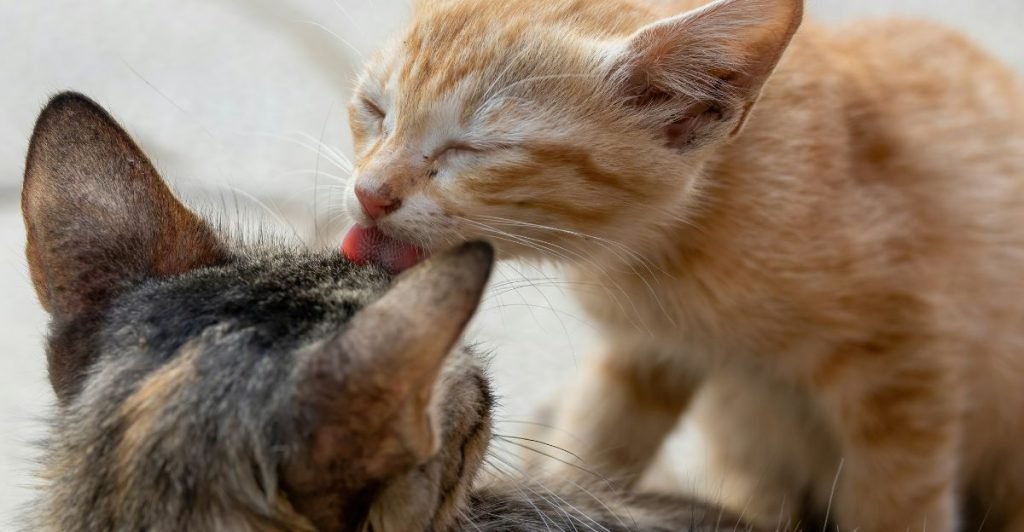
Have you ever noticed your cat licking another cat or even you in a gentle, repetitive way? You might wonder if this simple act means something deeper—like a way your cat is showing dominance.
Understanding why cats groom each other can unlock secrets about their social world and your relationship with them. If you want to know whether grooming is just a loving gesture or a subtle power move, keep reading. This insight will change how you see your furry friend forever.

Credit: basepaws.com
Cat Grooming Habits
Cats spend a lot of time grooming themselves and others. Grooming helps keep their fur clean and healthy. It also plays a role in how cats communicate with each other. Understanding these grooming habits can reveal more about their social behaviors and relationships.
Self-grooming Patterns
Cats lick their fur to remove dirt and loose hair. This keeps their coat smooth and shiny. They use their tongue to spread natural oils across their fur. Grooming calms cats and reduces stress. Cats often groom after eating, waking up, or during quiet moments. They focus on hard-to-reach areas like behind the ears and under the legs. This habit also helps control their body temperature.
Social Grooming Among Cats
Cats groom each other to build bonds. This behavior is called allogrooming. It often happens between cats that live together or are close friends. Grooming another cat shows trust and friendship. It also helps reduce tension in groups. Cats may groom faces, heads, and necks, where they cannot reach easily. This act can also signal dominance or submission depending on the situation. Social grooming strengthens group harmony and keeps cats connected.
Meaning Behind Grooming
Grooming among cats is more than just cleaning. It holds deep meaning in their social lives. Cats use grooming to communicate feelings and establish relationships. Understanding these signals helps decode their behavior and social structure.
Bonding And Affection
Cats groom each other to build trust and friendship. This behavior is called allogrooming. It shows they feel safe and connected. Grooming helps strengthen their social bonds. It is a quiet way to say, “You are part of my group.”
Territorial Signals
Grooming also marks territory. Cats leave their scent on others while grooming. This signals ownership and group membership. It helps reduce conflicts by showing who belongs where. This scent marking is subtle but powerful in cat society.
Stress And Comfort
Grooming calms cats during stress. Cats groom themselves or others to feel safe. This behavior releases tension and soothes nerves. Grooming can be a way to handle changes or threats. It creates a sense of comfort and control.
Dominance In Cat Groups
Cats live in groups that have a clear social order. This order helps reduce fights and keeps peace. Dominance is a key part of how cats interact in these groups. It shows who leads and who follows. Understanding this helps explain why cats groom each other.
Hierarchy And Social Structure
Cat groups have a hierarchy, like a small community. One or two cats usually lead the group. These leaders get first access to food and resting spots. Lower-ranking cats wait their turn. The social order keeps the group stable. Each cat knows its place and role.
Behaviors Indicating Dominance
Dominant cats show their status in many ways. Grooming is one important behavior. A dominant cat often grooms others to show control. It also uses body language like staring and standing tall. Sometimes, dominant cats mark territory with scent. These actions signal their power without fighting.
Credit: basepaws.com
Grooming As A Dominance Signal
Cats use grooming for more than just cleanliness. Grooming can act as a way for cats to show dominance within their group. This behavior helps establish social order and control. It reflects relationships and power without fighting.
Through grooming, cats communicate who is in charge. The dominant cat often starts or controls the grooming session. This silent message keeps peace among cats by setting clear roles.
Grooming Order And Control
In a group of cats, grooming follows a certain order. The dominant cat usually grooms first and chooses who to groom. Subordinate cats accept this and groom lower-ranking cats.
Control during grooming shows who leads. The cat that decides when and where grooming happens holds power. This control helps avoid conflicts and keeps the group stable.
Cases Where Grooming Implies Power
Dominant cats often groom others more than they get groomed. This shows their control over the group. They may focus on grooming vulnerable spots like the head and neck.
Sometimes, grooming is paired with other dominance signals. These include staring or body posture. Together, these signs make the power dynamic clear.
Grooming as a dominance signal helps cats bond while showing rank. It reduces fighting and keeps social harmony.
Other Signs Of Dominance
Besides grooming, cats use a range of behaviors to show dominance. These signs often involve their body language and the sounds they make. Paying attention to these cues can help you understand your cat’s social dynamics better.
Body Language Cues
Dominant cats often hold their bodies tall and confident. You might notice them standing with their tails straight up, sometimes with a slight curve at the tip. This posture signals assertiveness and control.
Watch how your cat approaches others. A dominant cat may lean in or gently nudge another cat to assert their place. They often maintain direct eye contact, which can feel challenging to other cats.
Have you seen your cat block another’s path or take over a favorite resting spot? These are subtle but clear dominance moves. It’s their way of saying, “This is mine.”
Vocalizations And Posture
Dominance isn’t just about looks—it’s about sound too. Cats may use low growls, firm meows, or sharp hisses to communicate their status. These vocalizations warn others to keep their distance.
Posture often works hand-in-hand with these sounds. A dominant cat might puff up their fur to appear larger or flatten their ears to show seriousness. The combination makes their message loud and clear.
Think about your cat’s usual sounds and posture. When do they change? Noticing these shifts can reveal moments when your cat wants to assert dominance.
Interpreting Mixed Signals
Cats use grooming to communicate a lot. It can show care, friendship, or even dominance. Sometimes, their grooming actions send mixed signals. This can confuse cat owners trying to understand what their cats mean. Recognizing these subtle hints is important to know if grooming shows dominance or something else.
When Grooming Is Not Dominance
Not all grooming means one cat is dominant over another. Cats groom for many reasons:
- To clean themselves or others
- To calm down or relax
- To bond and show affection
- To share scent and feel safe
Sometimes, a cat may groom another to show care, not control. Grooming can also be a way to reduce stress. If a cat looks relaxed or happy during grooming, it usually is not about dominance.
Contextual Factors To Consider
Look at the whole situation before deciding what grooming means. Watch the cats’ body language and the environment around them:
- Are the cats calm or tense?
- Is the grooming gentle or forceful?
- Does the groomed cat try to move away?
- Are there other signs of aggression or fear?
- Is grooming part of a routine or a new behavior?
Understanding these factors helps interpret grooming correctly. It shows if a cat is being dominant or simply affectionate. Observing over time gives clearer answers.
Impact On Cat Relationships
Understanding how grooming affects cat relationships reveals much about their social world. Grooming is more than cleaning. It plays a key role in how cats connect and establish their place in the group. This behavior impacts trust, hierarchy, and peace among cats.
Grooming And Social Bonds
Grooming strengthens bonds between cats. Cats groom each other to show care and friendship. This act helps build trust and reduces tension. It creates a sense of safety in their group. Cats that groom together often share a close connection.
Grooming also helps in calming anxious cats. It can soothe stress and create comfort. This behavior is a sign of acceptance and belonging. It tells cats they are part of the family.
Managing Multi-cat Households
In homes with many cats, grooming affects group balance. Dominant cats may groom others to show control. Lower-ranking cats often accept this grooming to avoid conflict. Watching grooming patterns helps owners understand cat relationships.
It is important to provide enough space and resources. This reduces fights and stress. Recognize signs of forced grooming or avoidance. These can mean tension or bullying.
Encourage positive grooming by:
- Offering separate resting spots
- Providing multiple litter boxes and feeding areas
- Observing cats’ behavior regularly
- Intervening calmly if conflicts arise

Credit: basepaws.com
Frequently Asked Questions
Do Cats Groom To Show Dominance?
Cats groom each other to build bonds, not just to show dominance. Grooming signals trust and social connection among cats.
Can Grooming Indicate A Cat’s Social Rank?
Yes, dominant cats often groom submissive ones. This behavior reinforces social hierarchy within cat groups.
Why Do Cats Groom Other Cats Frequently?
Cats groom others to maintain hygiene and strengthen social bonds. It’s a friendly and calming activity.
Is Grooming A Sign Of Affection Or Control?
Grooming mostly expresses affection and care. However, it may also subtly assert control in cat relationships.
Conclusion
Cats often groom each other to show care, not just dominance. This behavior helps build trust and friendship between them. Sometimes, grooming can show who leads in their group. Watching your cats closely can help you understand their social bonds better.
Remember, grooming is a natural way cats communicate feelings. It’s not always about power or control. Each cat’s personality plays a big role too. Observing these actions helps you enjoy your cats’ unique ways of bonding. Caring for your cat means noticing these small, meaningful moments.
