


Do you ever find yourself puzzled by your cat’s quirky antics? Perhaps you’re intrigued by the mysterious language of purrs, meows, and curious glances.
Understanding your feline friend can feel like solving a delightful puzzle, and that’s where a Cat Behaviour Course comes in. Imagine transforming your relationship with your cat by decoding its every move and mood. Picture yourself confidently addressing behavioral issues and enhancing your cat’s happiness and well-being.
This is more than just training; it’s about forging a deeper bond with your furry companion. Ready to unlock the secrets of cat behavior and become the cat whisperer you always knew you could be? Keep reading to discover how this course can revolutionize your understanding of your beloved pet.
Cat Communication
Understanding how cats communicate is key to building a stronger bond with your feline friend. Cats use a mix of body language, sounds, and subtle movements to express their feelings and intentions. Paying attention to these signals can help you respond appropriately and improve your relationship.
Body Language Signals
Your cat’s posture tells you a lot about their mood. A relaxed body with soft eyes usually means your cat feels safe and content. On the other hand, a stiff body or raised fur can signal fear or aggression.
I once misread my cat’s crouched position as playful, but she was actually scared of a loud noise. Since then, I’ve learned to watch for signs like tense muscles or flattened ears to avoid stressing her out.
Vocalizations And Their Meanings
Cats use a variety of sounds to communicate, and each one has a different meaning. A slow, gentle purr often means comfort or happiness, while a sharp hiss warns you to back off. Meows can vary too—some are a call for attention, others a demand for food.
Try to notice the tone and context of your cat’s vocalizations. Have you ever heard a soft chirp when your cat spots a bird outside? That’s their way of expressing excitement or curiosity.
Tail And Ear Movements
The tail and ears are highly expressive parts of your cat’s body. A tail held high usually shows confidence, while a twitching tail tip can indicate irritation. Similarly, ears pointed forward mean interest, and flattened ears suggest fear or anger.
Next time your cat’s tail flicks rapidly, pause and observe—are they playing, annoyed, or overstimulated? Understanding these subtle cues can prevent misunderstandings and help you meet your cat’s needs better.
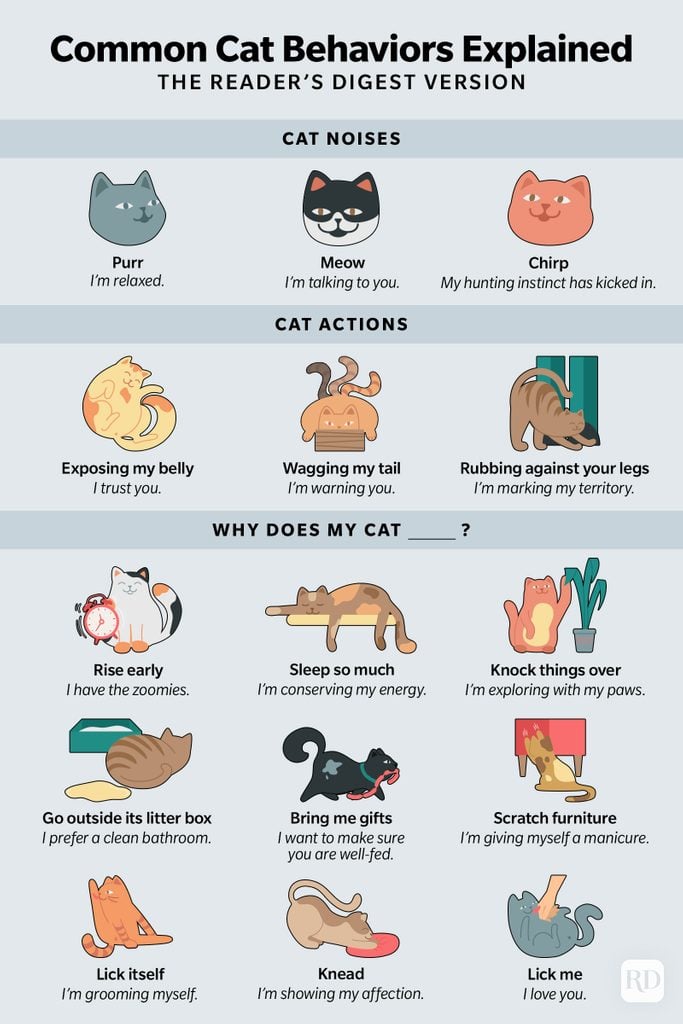
Credit: www.rd.com
Common Cat Behaviors
Understanding common cat behaviors helps you build a better relationship with your feline friend. Cats communicate a lot through their actions, and recognizing these patterns can prevent misunderstandings. Let’s look closely at some typical behaviors you’ll notice every day.
Hunting And Play Patterns
Cats have a natural hunting instinct that shows up in their play. You might see your cat stalking toys, pouncing, or chasing shadows. These actions aren’t just fun; they keep your cat sharp and active.
Offering toys that mimic prey, like feather wands or laser pointers, satisfies this instinct. If your cat suddenly starts biting or scratching during play, it’s a sign they need more interactive games to release energy.
Grooming Habits
Grooming is more than cleanliness for cats; it’s a way to relax and feel secure. You might notice your cat licking their fur several times a day or even grooming you gently. This behavior also helps them regulate body temperature and reduces stress.
If your cat suddenly stops grooming, it could indicate a health problem or anxiety. On the other hand, over-grooming may point to skin irritations or boredom. Keep an eye on these habits to catch any issues early.
Sleeping And Resting Routines
Cats sleep between 12 to 16 hours a day, often in short bursts. You’ll find them napping in cozy, quiet spots where they feel safe. These rest periods help them recharge for bursts of activity.
Notice if your cat changes their usual sleeping place or pattern; it might signal discomfort or illness. Creating a comfortable, undisturbed resting area can improve their well-being significantly.
Behavioral Challenges
Understanding your cat’s behavioral challenges is key to building a stronger bond and a happier home. Cats don’t always express their feelings clearly, which can make dealing with issues frustrating. Knowing what triggers these behaviors helps you respond in ways that soothe rather than escalate the problem.
Aggression Triggers
Aggression in cats can be sudden and confusing. It often comes from fear, pain, or territorial instincts. Notice when your cat’s aggression spikes—are there loud noises, new people, or other animals involved?
One cat I worked with became aggressive only when approached during nap time. Learning to respect those quiet moments helped reduce the outbursts. Think about your cat’s environment and daily routine. Could subtle changes lower their stress and prevent aggressive reactions?
Litter Box Issues
Litter box problems are more than just inconvenient; they often signal discomfort or stress. Cats may avoid the box because it’s dirty, in a noisy spot, or because they associate it with pain.
Try keeping the litter box clean and placing it in a calm, accessible area. If your cat suddenly stops using the box, a vet check is important to rule out health issues. Have you considered how many boxes you need? The rule of thumb is one per cat, plus one extra.
Scratching And Marking
Scratching isn’t just about damaging furniture—it’s a natural way for cats to mark territory and keep their claws healthy. However, unwanted scratching can be frustrating for you.
Providing multiple scratching posts and placing them near favorite resting spots can redirect this behavior. Use catnip or toys to encourage use of these posts. Ever noticed if your cat scratches more during certain times or after specific events? Understanding these patterns can guide your response.
Training Techniques
Training your cat effectively means understanding the techniques that truly influence their behavior. The right approach can make learning enjoyable for both you and your feline friend. Let’s dive into training techniques that build trust, encourage good habits, and reduce frustration.
Positive Reinforcement
Positive reinforcement means rewarding your cat for good behavior rather than punishing bad behavior. This creates a strong connection between actions and rewards in your cat’s mind.
Simple rewards like treats, praise, or petting work well. For example, giving a treat when your cat uses the scratching post teaches them what you want them to do.
Have you noticed how cats respond better when you celebrate their small wins? Consistency is key—reward every time to build clear habits.
Clicker Training Basics
Clicker training uses a small device that makes a clicking sound to mark desired behavior instantly. This sound tells your cat they did something right and a reward is coming.
Start by clicking and giving a treat immediately to help your cat associate the sound with positive outcomes. Then, click only when your cat performs the behavior you want, like sitting or coming when called.
Patience is important here. Cats learn at different speeds, so keep sessions short and fun. Do you think your cat would enjoy this game-like training?
Discouraging Unwanted Behaviors
Ignoring bad behavior often works better than punishment because cats don’t connect punishment with their actions. Instead, redirect their energy to appropriate activities.
If your cat scratches furniture, gently move them to a scratching post instead of yelling or spraying water. Over time, they learn what’s acceptable without fear or stress.
Remember, sudden punishment can harm your relationship. Would you rather build trust or fear with your cat? Choose methods that encourage learning and respect.
Building A Strong Bond
Building a strong bond with your cat transforms your relationship from simple coexistence to a meaningful connection. It requires attention to their unique preferences, engaging activities, and a welcoming environment. When you understand and respect what your cat enjoys, you open the door to trust and affection that lasts a lifetime.
Understanding Cat Preferences
Every cat has its own personality and likes. Some prefer gentle petting, while others enjoy a quick scratch behind the ears. Watch how your cat reacts to different touches and sounds to learn what makes them comfortable or excited.
Notice their favorite resting spots and times for play. Do they prefer quiet corners or busy areas? Recognizing these preferences helps you avoid stress and build trust naturally.
Interactive Play Ideas
Play is a powerful way to bond. Use toys that mimic prey, like feather wands or laser pointers, to engage your cat’s natural hunting instincts. Short, frequent play sessions keep your cat active and interested.
Try hiding treats in puzzle toys to challenge your cat’s mind. Does your cat enjoy chasing moving toys or batting at balls? Observe and adapt your play style to match their energy and mood.
Creating A Cat-friendly Environment
Design your home with your cat’s comfort in mind. Provide vertical spaces like shelves or cat trees to satisfy their climbing urges. Soft bedding in quiet spots lets them relax safely.
Keep litter boxes clean and placed in low-traffic areas. Consider adding scratching posts near favorite resting places to prevent unwanted furniture damage. What small changes can you make today to make your home a sanctuary for your cat?

Credit: x.com
Health And Wellbeing
Understanding your cat’s health and wellbeing is key to a happy, long life together. Paying attention to subtle changes in behaviour can reveal a lot about your cat’s physical and emotional state. Let’s dive into how you can spot stress, boost their nutrition and exercise, and know when it’s time to see a vet.
Recognizing Stress Signs
Stress in cats often shows up in ways you might miss at first. Watch for changes like hiding more than usual, excessive grooming, or sudden aggression. These signs mean your cat feels uneasy and needs your help.
Notice if your cat stops eating or starts meowing loudly at odd times. These are cries for comfort or attention. Have you seen your cat pacing or avoiding their litter box? That’s another red flag worth addressing quickly.
Nutrition And Exercise Tips
Your cat’s diet fuels their energy and overall health. Choose high-quality food rich in protein and low in fillers like corn or soy. Cats are natural hunters, so feeding smaller, frequent meals can mimic their natural eating habits.
Exercise keeps your cat’s mind sharp and body strong. Simple activities like interactive toys, climbing trees, or short play sessions can make a big difference. Have you tried using a laser pointer or feather wand to get your cat moving?
- Feed a balanced diet tailored to your cat’s age and health.
- Encourage play for at least 15 minutes daily.
- Rotate toys to keep your cat interested.
When To Consult A Vet
Knowing when to seek professional help can save your cat’s life. If you see persistent vomiting, diarrhea, or sudden weight loss, don’t wait. These symptoms could point to serious issues.
Behavioral changes like sudden aggression or withdrawal also deserve a vet’s attention. Your vet can rule out medical causes before you tackle behavioural training. Have you marked your calendar for regular wellness checks?

Credit: www.animalbehaviourcollege.ca
Frequently Asked Questions
What Topics Are Covered In A Cat Behaviour Course?
A Cat Behaviour Course covers feline body language, communication, common behaviour issues, and training techniques. It helps owners understand and manage their cat’s needs effectively.
Who Can Benefit From Taking A Cat Behaviour Course?
Cat owners, pet trainers, and animal enthusiasts benefit by learning how to improve cat wellbeing and solve behavioural problems confidently.
How Long Does A Typical Cat Behaviour Course Last?
Most courses last between 4 to 8 weeks, offering flexible online or in-person sessions tailored to fit busy schedules.
Can A Cat Behaviour Course Help With Aggressive Cats?
Yes, these courses teach strategies to identify triggers and reduce aggression safely, improving the cat’s and owner’s relationship.
Conclusion
Understanding cat behavior helps build a stronger bond with your pet. This course teaches how cats think and act daily. You learn to read their signals and meet their needs. Happy cats make happy homes. Taking time to learn about cats pays off in trust and love.
Caring for a cat becomes easier and more fun. This knowledge helps prevent problems and keeps cats calm. A cat behavior course is a smart step for every cat owner.
