

Is your feline friend suddenly acting a bit strange? If your cat’s behavior has taken a dramatic turn, she might be in heat.
Understanding what your cat is going through can be challenging, especially when her actions seem unpredictable or confusing. You’re not alone if you’re feeling a bit overwhelmed. Many cat owners experience this, and it’s important to know what’s happening and how to manage it.
You’ll discover the telltale signs of a cat in heat and learn how to respond to her needs. By the end, you’ll have the knowledge to make this phase smoother for both you and your furry companion. Get ready to dive into the fascinating world of feline behavior and find out how you can help your cat feel more comfortable and content during this time.
Signs Of A Cat In Heat
Cats in heat show clear signs that help you understand their behavior. Recognizing these signs is important to care for your pet properly. These signals tell you your cat needs attention and comfort during this time.
Vocal Changes
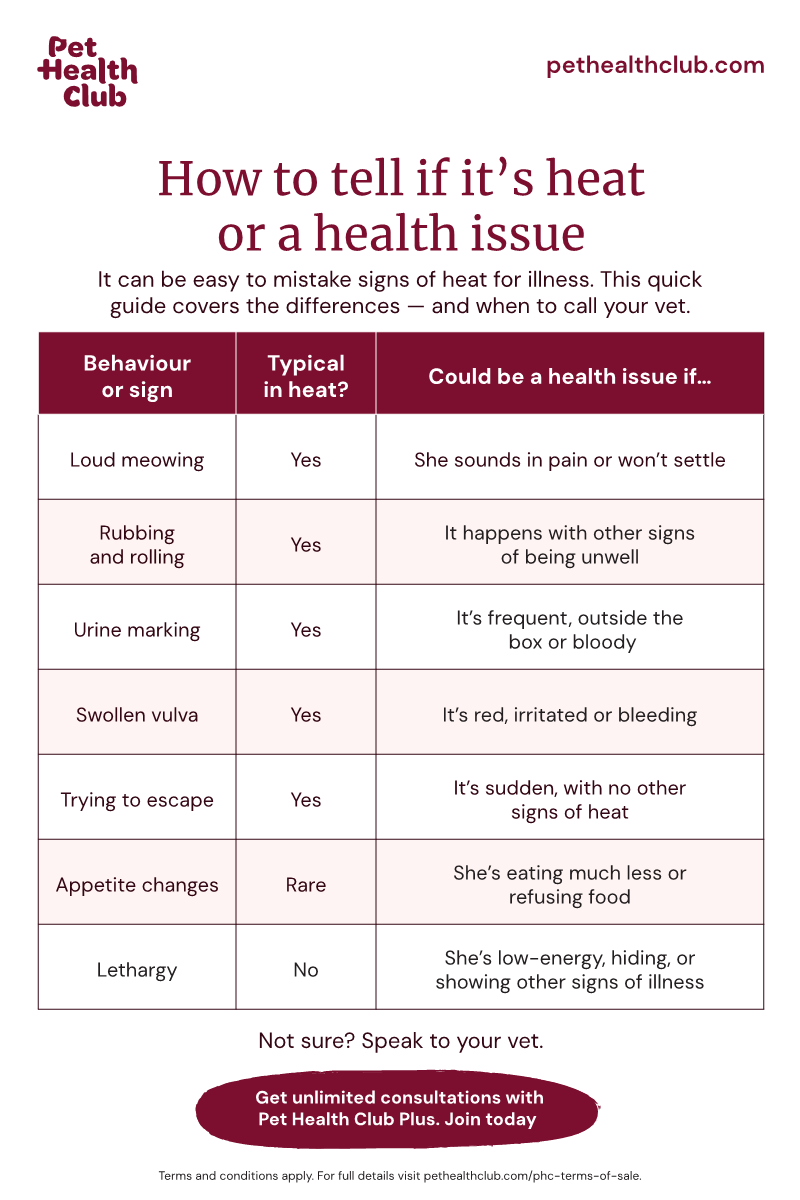
A cat in heat often becomes very vocal. She may meow loudly and frequently. This loud calling helps attract male cats. The sounds can be persistent and different from normal meows.
Increased Affection
Your cat might seek more attention than usual. She may rub against people and objects often. Purring and rolling on the floor are common too. This shows she wants closeness and comfort.
Restlessness And Agitation
The cat may seem restless and unable to relax. She might pace around the house or yard. Agitation can lead to scratching furniture or walls. This behavior reflects her discomfort and nervous energy.
Marking Territory
Cats in heat often spray urine to mark their space. This behavior signals to other cats she is ready to mate. You might notice a strong, unusual smell in the house. Marking helps her communicate with other cats nearby.
Credit: www.pethealthclub.com
Causes Of Heat Cycles
Understanding what causes heat cycles in cats can help you better manage their behavior and well-being. Heat cycles are driven by several factors that interact within your cat’s body and environment. Knowing these causes can make it easier to anticipate changes and respond effectively.
Hormonal Triggers
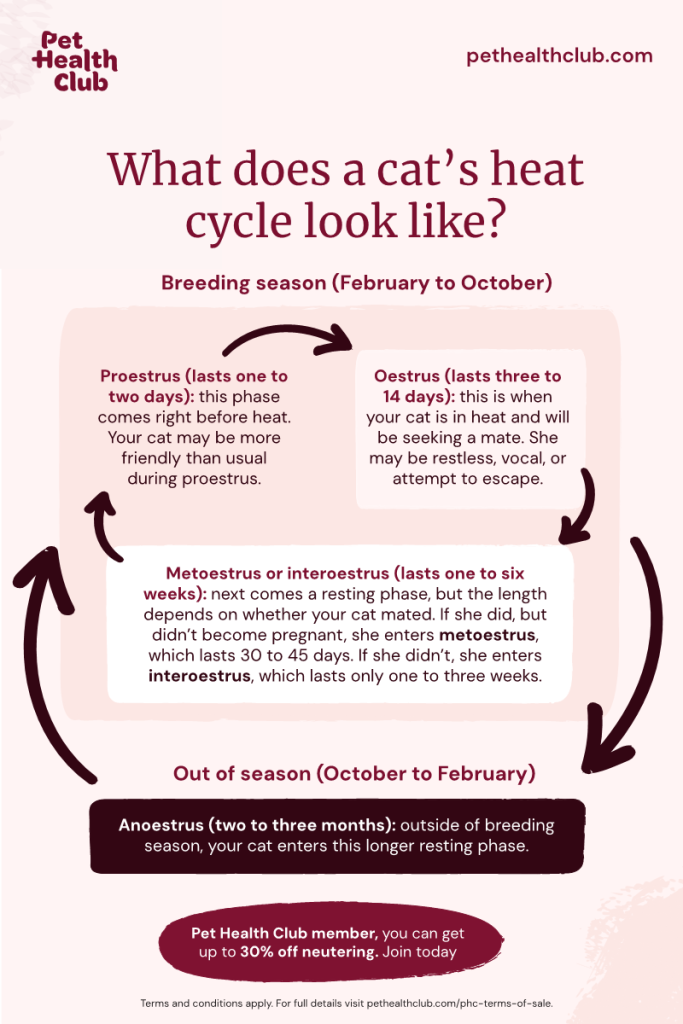
Hormones play a central role in starting and regulating heat cycles. The hormone estrogen rises and falls, signaling your cat’s body to enter heat. This hormonal shift affects her behavior, making her more vocal and affectionate.
Have you noticed sudden changes in your cat’s mood or activity? That’s often the hormone surge kicking in. These changes prepare her body for potential mating, even if she isn’t around a male cat.
Environmental Factors
Light exposure is a key environmental trigger. Longer daylight hours in spring and summer often stimulate heat cycles, as cats are seasonal breeders. You might see your cat go into heat more frequently during these times.
Stress and household changes can also influence heat behavior. Moving to a new home or adding another pet can disrupt your cat’s cycle or intensify her symptoms. Have you observed behavior shifts after changes at home?
Breed And Age Influences
Some breeds experience heat cycles more frequently or with different intensity. Siamese and Burmese cats often have shorter cycles but may show stronger signs. Age matters too—kittens can enter heat as early as four months, while older cats may slow down.
Your cat’s breed and age shape how she experiences heat. Understanding these factors helps you provide the right care and attention during her cycles. Are you tracking her cycles to notice these patterns?
Behavioral Changes During Heat
When a cat enters heat, her behavior changes noticeably. These shifts are natural signs of her reproductive cycle. Understanding these behaviors helps owners care better during this time.
Mood Swings And Irritability
A cat in heat often shows mood swings. She may be very affectionate one moment and restless the next. Irritability can appear with little provocation. This is due to hormonal changes affecting her emotions. Owners might notice sudden meowing or growling without reason.
Escaping Attempts
Cats in heat may try to escape the house. They seek to find a mate outside. This behavior can be risky as outdoor dangers increase. Cats often scratch doors or windows to get out. Keeping doors and windows secure is important during this phase.
Changes In Appetite
Appetite can change during a cat’s heat cycle. Some cats eat less, while others may eat more. These shifts depend on each cat’s unique response. Monitoring food intake helps ensure she stays healthy. Offer fresh water and balanced meals regularly.
Managing Heat Behavior
Managing your cat’s heat behavior can feel overwhelming, especially when her restlessness and vocalizations take over your home. However, creating a supportive atmosphere can ease her discomfort and help you both navigate this challenging time. Let’s look at effective ways you can make this period smoother for your feline friend.
Creating A Calm Environment
Your cat’s mood swings during heat are influenced by her surroundings. A quiet, comfortable space helps reduce her anxiety and agitation.
Try dimming the lights and lowering noise levels. Soft music or white noise can mask outside sounds that might trigger her restlessness.
Have you noticed how your cat reacts to different rooms? Sometimes, simply moving her bedding to a peaceful corner can make a big difference.
Providing Distractions
Keeping your cat busy redirects her energy away from heat-driven behaviors. Interactive toys like feather wands or laser pointers work well.
Rotate toys regularly to maintain her interest. Puzzle feeders also stimulate her mind and keep her engaged for longer periods.
Consider spending extra time playing with her. Your attention can calm her and reduce her desire to seek attention in less desirable ways.
Using Pheromone Products
Pheromone diffusers and sprays mimic natural calming signals your cat recognizes. These products can reduce stress and help balance her mood during heat.
Plug in a diffuser in the room where she spends most of her time, or spray bedding and resting areas daily. Many cat owners report noticeable improvements within a few days.
Have you tried pheromone products before? If not, they might be a simple, drug-free way to ease her discomfort.
Medical Options And Spaying
Understanding the medical options available for your cat in heat can make a significant difference in managing her behavior and overall health. Spaying stands out as a reliable solution, offering both immediate and long-term benefits. Let’s examine what spaying involves and how it can affect your feline friend.
Benefits Of Spaying
Spaying your cat prevents unwanted pregnancies, which helps control the pet population and reduces the number of homeless cats. It also eliminates the discomfort and stress your cat experiences during heat cycles, such as restlessness and loud vocalizations.
Beyond behavior, spaying reduces the risk of serious health issues like uterine infections and certain types of cancers. Have you noticed how your cat becomes more affectionate yet anxious during heat? Spaying can stabilize her mood and make her more comfortable overall.
Timing And Procedures
Most veterinarians recommend spaying cats before their first heat, usually around 5 to 6 months old. This timing can maximize health benefits and simplify the procedure. However, cats can be spayed at any age if necessary.
The surgery itself is straightforward and done under general anesthesia. It typically involves removing the ovaries and uterus, which stops the heat cycles permanently. Your vet will provide detailed instructions to prepare your cat and care for her afterward.
Post-surgery Behavior
After spaying, many cat owners notice a calmer and more relaxed pet. The intense behaviors linked to heat, like yowling and pacing, usually disappear. It’s common for cats to recover quickly, returning to their usual activities within a few days.
Watch for any signs of discomfort or unusual behavior, and contact your vet if you have concerns. How different would your daily routine be if your cat’s heat-related behaviors were a thing of the past? Spaying offers a path to that peace for both you and your feline companion.

Credit: www.petdrugsonline.co.uk
When To Consult A Veterinarian
Knowing when to consult a veterinarian during your cat’s heat cycle is essential for her well-being. While many behaviors during heat are normal, some signs indicate that your cat needs professional care. Paying attention to these signs can prevent serious health issues and keep your cat comfortable.
Unusual Behavior Patterns
Is your cat acting more withdrawn than usual or suddenly lethargic? These could be signs that something is wrong beyond typical heat behavior. If she stops eating, hides excessively, or shows signs of confusion, it’s time to seek veterinary advice.
Normal heat behavior includes increased vocalization and restlessness, but extreme changes in mood or activity level often signal an underlying problem.
Health Concerns During Heat
Heat cycles can sometimes lead to health complications like infections or uterine issues. You should consult a vet if you notice unusual discharge, swelling, or foul odors around her genital area.
Also, if your cat experiences frequent vomiting, diarrhea, or signs of pain, these symptoms require immediate attention. Don’t wait; early intervention can save your cat from serious conditions.
Persistent Aggression Or Distress
While some aggression during heat is normal, persistent aggressive behavior or signs of extreme distress are red flags. If your cat lashes out at family members or other pets regularly, this behavior might need professional management.
Distress can also manifest as constant pacing, excessive grooming to the point of injury, or vocalizing nonstop. Ask yourself: Is this behavior typical for her, or has it escalated beyond what you can handle safely?
Credit: www.pethealthclub.com
Frequently Asked Questions
What Are Common Signs Of A Cat In Heat?
A cat in heat often shows restlessness, vocalization, and increased affection. She may also spray urine and assume mating positions. These behaviors signal her fertility and readiness to mate.
How Long Does A Cat Stay In Heat?
Typically, a cat stays in heat for 4 to 7 days. If she does not mate, the cycle may repeat every 2 to 3 weeks during breeding season.
Can A Cat In Heat Harm Furniture?
Yes, cats in heat may scratch or spray on furniture. This is due to increased territorial and mating behaviors driven by hormones.
How Can I Calm A Cat In Heat?
Provide a warm, quiet space and gentle affection. Play and distraction can help reduce her stress during this period.
Conclusion
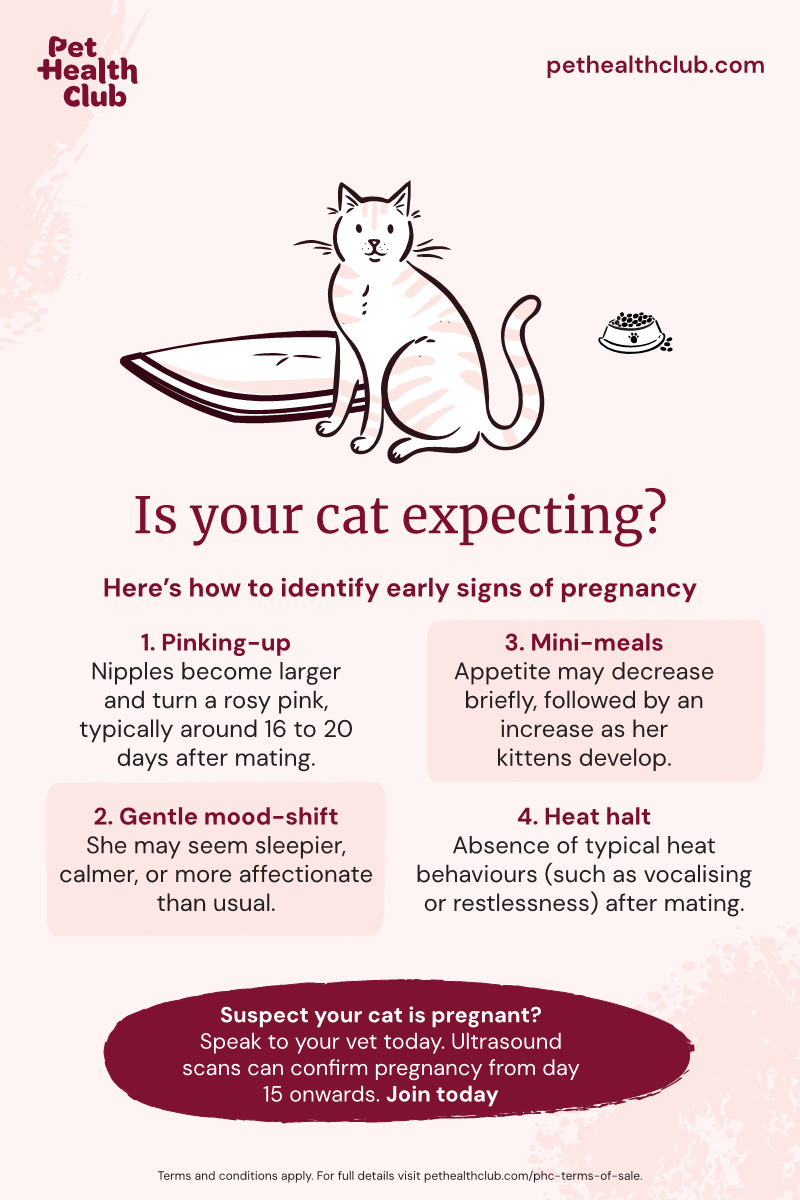
Cats in heat show clear signs and behaviors you can notice. Understanding these helps you care for your cat better. Expect loud meowing, restlessness, and rubbing on surfaces. These actions are normal and natural. Patience and gentle care ease this phase for your pet.
Spaying your cat can stop heat cycles and related behaviors. Knowing your cat’s needs keeps her comfortable and safe. Every cat is unique, so observe and respond kindly. Your attention makes a big difference in her well-being.
