


Ever wondered what your cat is trying to tell you with the flick of its tail? Understanding cat behavior, especially through their tail movements, can feel like deciphering a secret language.
But here’s the intriguing part: your cat’s tail is a powerful communication tool, revealing emotions and intentions. Imagine having the ability to interpret your furry friend’s every mood, from happiness to agitation, just by watching their tail. You’re about to unlock the mysteries of your cat’s behavior and strengthen your bond like never before.
Stay with us, and you’ll discover the fascinating world of cat tail signals and what they mean for you and your feline companion.

Credit: moderncat.com
Tail Positions And Their Meanings
The tail is a powerful tool for cats to express their emotions. Each tail position offers clues about what your cat feels or thinks. Observing these signals helps you understand your furry friend better.
Cat tails move in many ways. They can stand tall, droop low, or swing side to side. These movements carry different meanings. Paying attention to tail positions can improve your bond with your cat.
Upright Tail Signals
An upright tail usually shows happiness and confidence. Cats often raise their tails straight up when they greet people or feel safe. A tail with a slight curve at the tip means friendliness.
When the tail is stiff and straight up, the cat feels alert and curious. This is a good time to approach your cat calmly.
Low And Tucked Tail
A tail held low or tucked tightly under the body signals fear or submission. Cats use this position to protect themselves or show they are not a threat.
Sometimes, a tucked tail means the cat feels unwell or stressed. It is best to give your cat space in this state.
Horizontal Tail Movements
A tail held horizontally, moving slowly from side to side, shows concentration or mild irritation. Cats often use this when watching something closely.
If the tail swings quickly and stiffly, the cat might be annoyed or ready to react. Watch for other signs like ears or body posture to understand better.
Tail Flicks And Twitches
Understanding your cat’s tail flicks and twitches can open a window into their mood and intentions. These subtle movements often reveal feelings that words can’t express. Paying attention to these signals helps you respond better to your feline friend’s needs.
Slow Tail Swishes
Slow tail swishes usually mean your cat is focused or mildly interested. You might notice this when they watch birds outside or stalk a toy. It’s their way of saying, “I’m curious, but calm.”
Have you seen your cat gently swishing their tail while eyeing something? That’s a sign they’re engaged but not stressed. If you want to encourage playtime, this is a perfect moment to join in.
Rapid Tail Flicks
Rapid tail flicks often indicate irritation or agitation. Your cat might flick their tail quickly when annoyed or overstimulated during petting. Recognizing this can prevent unwanted scratches or bites.
Think about how your cat’s tail moves when you pet them for too long. Do you see those quick flicks? It’s their polite way of saying, “Enough for now.” Respecting this keeps your relationship strong and stress-free.
Tail Trembling
Tail trembling is a less common but powerful signal. It usually happens when your cat is very excited or anticipating something positive, like seeing you after a long day. This behavior shows deep emotional connection.
If your cat’s tail trembles when you come home, it’s a sign they truly missed you. Next time you notice this, respond with extra affection and see how your cat’s mood lifts instantly. What other moments have you caught your cat trembling their tail?
Tail And Body Language
The tail is more than just a fluffy extension of your cat’s body. It works closely with other body signals to express what your feline friend is feeling. Paying attention to tail movements along with ears and eyes can give you a clearer picture of your cat’s mood and intentions.
Tail In Relation To Ears And Eyes
Notice how your cat’s tail position changes alongside their ears and eyes. A tail held high with ears forward and wide-open eyes often shows confidence and curiosity. But if the tail twitches while the ears flatten and the eyes narrow, it usually signals irritation or annoyance.
Sometimes, a slow tail swish combined with dilated pupils and relaxed ears means your cat is playful but cautious. On the other hand, a puffed-up tail with pinned-back ears and a fixed stare often warns you to give space. Have you ever missed these subtle combos and misunderstood your cat’s mood?
Combining Tail With Vocal Cues
Your cat’s tail movements become even more meaningful when paired with their vocal sounds. A softly flicking tail with gentle purring suggests contentment and comfort. But a rapidly twitching tail paired with low growls or hisses indicates stress or agitation.
Listen closely to the pitch and volume of your cat’s meows while watching their tail. A high-pitched meow with an upright tail might mean they want attention or playtime. Conversely, a drawn-out, loud meow with a thrashing tail could be a sign of frustration or discomfort.
Next time your cat communicates, try reading these signals together. You might find you understand them better than ever before.
Tail Communication Between Cats
The tail is a powerful tool in cat communication. It reveals much about a cat’s feelings and intentions without a single meow. Understanding these tail signals can help you read your cat’s mood and respond appropriately.
Social Tail Signals
A cat’s tail position often shows how friendly or comfortable they feel around you or other cats. A tail held high usually means confidence and happiness. If your cat greets you with an upright tail, it’s a clear sign they are glad to see you.
Sometimes, the tail might quiver or twitch slightly at the tip during social interactions. This subtle movement can indicate excitement or affection. Have you noticed your cat’s tail flick when they’re about to play or when they’re pleased to be petted?
When cats walk side by side with tails touching or gently wrapped around each other, it shows trust and bonding. These social tail signals help cats maintain peaceful relationships and build friendships.
Aggression And Submission
The tail also plays a big role in warning others or showing submission. A puffed-up, bushy tail means your cat feels threatened or scared. This “piloerection” makes them look bigger, which is a clear sign to back off.
On the other hand, a low or tucked tail signals submission or fear. If your cat lowers their tail and crouches, they’re likely feeling vulnerable or trying to avoid a fight. Have you seen this behavior when introducing a new pet to your home?
Rapid tail flicking or lashing often signals irritation or aggression. This is your cat’s way of saying, “I’m not happy, give me space.” Recognizing these signs early can prevent unwanted scratches or bites.
Tail Health And Its Impact On Behavior
Your cat’s tail is more than just a fluffy appendage—it plays a vital role in their balance, communication, and overall behavior. Tail health directly affects how your cat moves and interacts with their environment. Paying attention to your cat’s tail can give you clues about their well-being and mood.
Injuries Affecting Tail Movement
Tail injuries can range from minor bruises to serious fractures or nerve damage. Even a small injury can make your cat uncomfortable and change how they hold or use their tail. You might notice your cat avoiding certain movements or showing signs of pain when their tail is touched.
Have you ever seen a cat flick their tail sharply or hold it low after an accident? This could indicate discomfort or injury. Prompt veterinary care is essential to prevent lasting damage or behavior changes caused by untreated tail injuries.
Tail Grooming And Comfort
Just like the rest of their body, your cat’s tail needs regular grooming. Dirt, mats, or parasites can cause irritation and affect your cat’s comfort. A well-groomed tail encourages your cat to use it naturally and confidently.
Sometimes, cats will over-groom their tails if they feel itchy or stressed, which can lead to bald spots or sores. Watching your cat’s grooming habits can tell you a lot about their health and emotional state. Have you noticed any changes in how your cat grooms their tail lately?

Credit: www.seemour.ai
Training And Responding To Tail Signals
Understanding how to train and respond to your cat’s tail signals can deepen your bond and improve communication. Your cat’s tail acts like a mood indicator, revealing feelings that words cannot express. By paying close attention and reacting appropriately, you can help your feline friend feel safer and more understood.
Recognizing Stress And Anxiety
A flicking or twitching tail often signals that your cat is stressed or anxious. If you notice this, it’s best to give your cat some space rather than trying to pet or pick them up. Sudden tail movements paired with flattened ears or wide eyes can be a clear sign your cat feels threatened or overwhelmed.
Try to observe what triggers these tail signals. Is it a loud noise, a new person, or another pet? Avoiding or managing these triggers can reduce your cat’s anxiety over time.
Enhancing Cat-human Interaction
Responding to your cat’s tail signals can make your interactions more positive and rewarding. When your cat holds its tail upright with a slight curve at the tip, it’s a friendly greeting—perfect for approaching and offering a gentle pet. You can even encourage this behavior by greeting your cat calmly and speaking softly.
Use your observations to tailor your play or cuddle sessions. If the tail starts to flick rapidly during play, it might be time to pause and let your cat relax. This shows respect for their boundaries and builds trust.
- Watch for tail signals before initiating contact.
- Adjust your approach based on your cat’s mood.
- Practice patience and allow your cat to guide interactions.
Have you ever noticed your cat’s tail telling you more than their meow? Paying attention to these subtle cues can transform your relationship in unexpected ways.
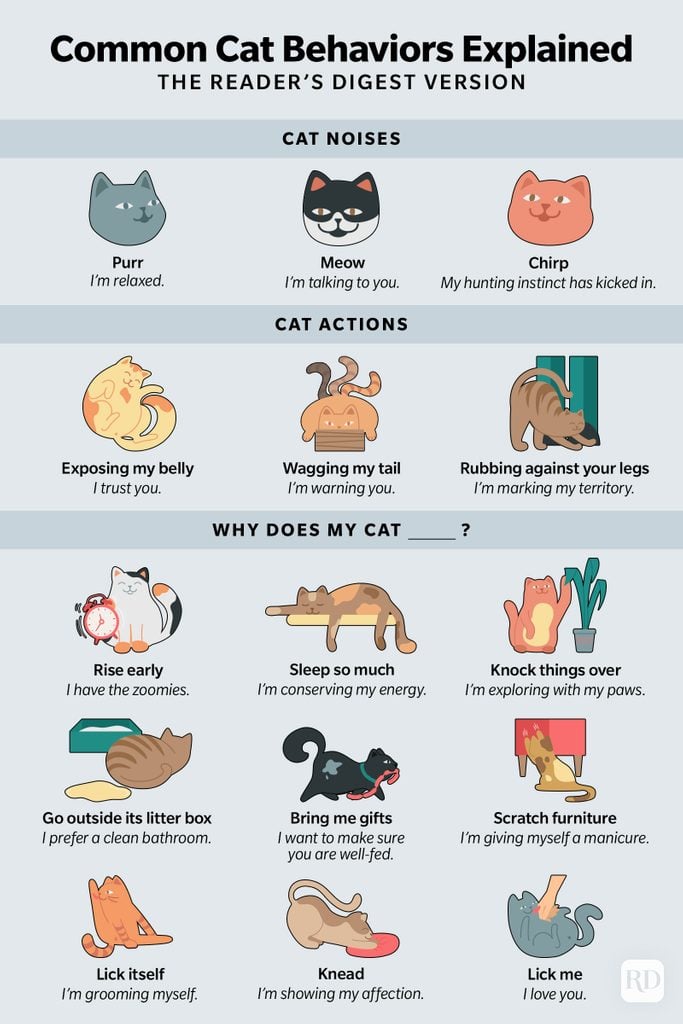
Credit: www.rd.com
Frequently Asked Questions
What Does A Cat’s Tail Position Mean?
A cat’s tail position signals its mood and intentions. A raised tail shows confidence, while a tucked tail indicates fear or submission. Tail movements help cats communicate with humans and other animals.
Why Do Cats Twitch Their Tails?
Tail twitching often shows irritation or concentration. Cats twitch tails when hunting or focusing. It can also signal mild annoyance or excitement.
How Can I Read My Cat’s Tail Language?
Observe tail height, movement, and shape. A puffed-up tail means fear or aggression. A slow wag often means curiosity or contentment. Understanding these cues improves your bond with your cat.
Does Tail Wagging Mean The Same In Cats And Dogs?
No, cats and dogs use tail wagging differently. Cats wag tails to express irritation or focus. Dogs wag tails mostly to show happiness or friendliness.
Conclusion
A cat’s tail shows many feelings and thoughts. Watching the tail helps you understand your cat better. A twitch or a flick means something different each time. Cats speak with their tails as much as with their meows. Knowing these signs builds a stronger bond between you and your pet.
Next time, pay close attention to your cat’s tail. It tells stories without words, clear and simple. Caring for your cat means listening to all its signals, tail included.
