

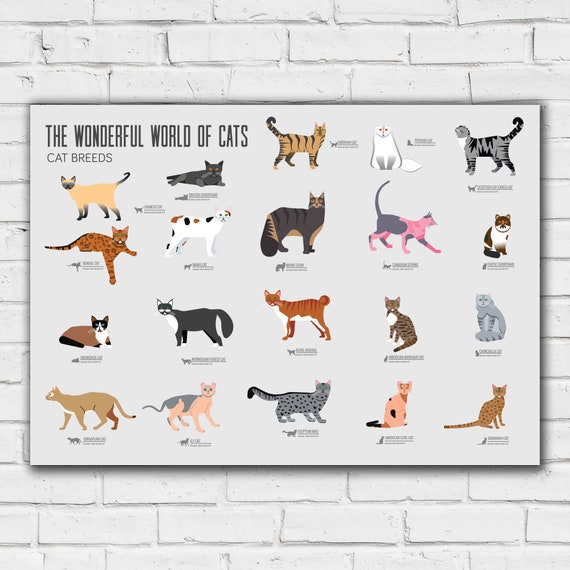
Are you curious about the diverse world of cat breeds? A cat breeds chart is an essential tool for any feline enthusiast.
It not only helps you understand the unique characteristics of different breeds but also guides you in choosing the perfect furry companion. Imagine knowing exactly which breed matches your lifestyle and personality. Whether you’re drawn to the elegance of the Siamese or the playful nature of the Maine Coon, this chart is your gateway to making an informed decision.
Dive into the fascinating world of cat breeds and discover which one is destined to become a cherished member of your family. Keep reading to explore the captivating differences and delightful quirks of these amazing creatures.
Credit: www.etsy.com
Popular Cat Breeds
Choosing a cat breed can feel overwhelming given the many options available. Knowing the popular breeds helps narrow down your choices based on personality, appearance, and care needs. Whether you want a playful companion or a calm lap cat, understanding different breeds can guide you to the perfect match.
Short-haired Breeds
Short-haired cats are low-maintenance and shed less, making them ideal for busy households. The sleek American Shorthairis known for its friendly nature and adaptability. Meanwhile, the Bengalstands out with its wild-looking spots and high energy.
Have you noticed how these cats often display a mix of playful and affectionate traits? Their easy grooming routine can save you time, especially if you’re new to cat care.
Long-haired Breeds
Long-haired cats require more grooming but reward you with stunning, fluffy coats. The Maine Coonis a gentle giant with a thick, water-resistant coat and a loving personality. The elegant Persianloves quiet environments and enjoys being pampered.
Think about how much time you can dedicate to brushing before choosing a long-haired breed. Their luxurious fur can be a bonding activity or a source of frustration if neglected.
Hairless Varieties
Hairless breeds like the Sphynxmay surprise you with their warmth and social nature despite their lack of fur. They require regular skin care but shed no hair, which some allergy sufferers appreciate. These cats often seek human attention, making them highly interactive pets.
Would you be comfortable with the extra bathing and skin care these cats need? Their unique look and personality can be a refreshing change if you want something different.
Physical Traits
Physical traits define a cat’s unique appearance and charm. These traits vary widely across breeds. They include coat colors, eye shapes, and body size. Understanding these features helps identify different cat breeds easily. It also highlights the beauty and diversity within the feline world.
Coat Colors And Patterns
Cats show many coat colors and patterns. Common colors include black, white, gray, orange, and cream. Patterns vary from solid to striped, spotted, or patched. Some breeds have distinctive markings like the Siamese’s color points or the Bengal’s rosettes.
- Solid: One uniform color
- Tabby: Stripes, swirls, or spots
- Calico: Patches of three colors
- Tortoiseshell: Mixed black and orange
- Pointed: Darker color on ears, face, paws, tail
Eye Shapes And Colors
Cat eyes come in many shapes and colors. Round, almond, or oval shapes are common. Eye color ranges from blue to green, yellow, amber, or copper. Some breeds have unique eye traits, like the odd eyes of the Turkish Van, with each eye a different color.
- Round eyes: Bright and open
- Almond eyes: Slightly slanted
- Blue eyes: Often seen in Siamese
- Green eyes: Common in many breeds
- Odd eyes: Two different colors
Size And Build
Cats vary in size from small to large. Some breeds are slender and graceful, like the Oriental Shorthair. Others are muscular and stocky, such as the British Shorthair. Build differences affect how cats move and their overall look.
- Small breeds: Lightweight and delicate
- Medium breeds: Balanced proportions
- Large breeds: Heavier and strong
- Slender build: Long legs, lean body
- Stocky build: Broad chest, thick legs
Temperament And Personality
Each cat breed has a unique temperament and personality. Understanding these traits helps match cats with their ideal homes. Personality influences how cats play, interact, and respond to people. Some breeds are lively and curious, while others prefer quiet and calm environments. Knowing these differences makes living with cats more enjoyable and rewarding.
Playful And Energetic Cats
Some cats love to run, jump, and explore. They need lots of toys and space to stay happy. These cats enjoy chasing balls and climbing furniture. Breeds like the Abyssinian and Bengal are known for their high energy. They keep owners entertained with their lively antics. These cats do well in active homes with time for play.
Calm And Affectionate Breeds
Many cats prefer quiet and gentle interaction. They enjoy sitting on laps and being petted slowly. These breeds often form strong bonds with their owners. Ragdolls and British Shorthairs are famous for their calm nature. They adapt well to calm households and enjoy peaceful routines. Such cats bring comfort and warmth to homes.
Independent Felines
Some cats like to spend time alone and explore by themselves. They do not demand constant attention or cuddles. These cats often entertain themselves and like quiet spaces. Breeds like the Russian Blue and Scottish Fold show this trait. Independent cats suit owners with busy lifestyles. They provide companionship without needing constant care.
Care Requirements
Understanding the care requirements of different cat breeds helps keep them healthy and happy. Each breed has unique needs. These needs cover grooming, diet, and health. Meeting these needs improves your cat’s quality of life.
Grooming Needs
Some cats have long, thick fur that mats easily. These breeds need daily brushing to prevent tangles and hairballs.
Short-haired cats require less grooming, usually once or twice a week is enough. Regular nail trimming and ear cleaning are important for all breeds.
- Long-haired cats: Daily brushing
- Short-haired cats: Weekly brushing
- All cats: Nail trimming and ear cleaning
Diet And Nutrition
Different breeds may have specific dietary needs based on their size and activity levels. High-protein diets support active breeds, while less active cats need fewer calories.
Fresh water must always be available. Avoid giving cats human food that can harm them, like onions or chocolate.
- Active breeds: High-protein diet
- Less active cats: Controlled calorie intake
- Always provide fresh water
Health Considerations
Some cat breeds are prone to certain health issues. Regular vet visits help catch problems early. Vaccinations and parasite control protect your cat from diseases.
Watch for breed-specific conditions like hip dysplasia or heart disease. Early care and treatment improve outcomes.
- Schedule routine vet check-ups
- Keep vaccinations up to date
- Monitor for breed-related health issues
Choosing The Right Cat
Choosing the right cat is important for a happy home. Cats have different personalities and needs. Matching a cat’s traits with your lifestyle helps everyone thrive. Consider how a cat fits with your daily routine and home environment. Think about your family and any allergies. This guide helps you find a cat that suits your life best.
Lifestyle Compatibility
Some cats are active and playful, needing lots of attention. Others prefer quiet and calm surroundings. Busy people might choose independent breeds that handle alone time well. If you work from home, a social cat can offer great company. Consider space too. Large breeds may need more room to roam. Small apartments suit smaller or less active cats.
Family And Children
Cats vary in how they react to children. Some enjoy playing and are very patient. Others prefer a calm, quiet environment without loud noises. Breeds known for their gentle nature suit families with young kids. Teaching children to respect a cat’s space is key. Always supervise interactions to keep both safe and happy.
Allergy-friendly Options
Allergies can stop many from enjoying cats. Some breeds produce fewer allergens and cause less reaction. These include Siberian, Balinese, and Sphynx cats. No cat is 100% hypoallergenic, but these breeds help reduce symptoms. Regular grooming and cleaning also lower allergens in the home. Choosing the right breed can make living with allergies easier.
Credit: www.etsy.com
Breed Popularity Trends
Cat breed popularity changes over time across different regions. These trends reflect how people’s preferences evolve. They depend on factors like appearance, personality, and care needs.
Understanding these trends helps cat lovers find breeds that match their lifestyle. It also highlights which breeds gain attention and which remain timeless favorites.
Most Loved Breeds Worldwide
Some cat breeds stay popular everywhere. Their friendly nature and easy care make them great pets.
- Siamese cats are known for their striking looks and talkative behavior.
- Maine Coons are large, gentle, and perfect for families.
- Persians attract people with their long, soft fur and calm personality.
- Ragdolls charm owners with their relaxed and affectionate traits.
Rising Stars In Cat Breeds
New breeds gain popularity as people seek unique pets. These cats often have special traits or appearances.
- Bengal cats have wild-looking spots and energetic behavior.
- Scottish Folds are loved for their folded ears and sweet nature.
- Sphynx cats attract attention with their hairless, warm skin.
Rare And Exotic Cats
Some cats remain rare due to their unique features or limited breeding. They fascinate collectors and enthusiasts.
- Serengeti cats look wild with long legs and large ears.
- Kurilian Bobtails have short tails and playful personalities.
- Chausies are hybrid cats with a wild jungle cat ancestor.

Credit: www.threads.com
Frequently Asked Questions
What Are The Most Popular Cat Breeds Worldwide?
Popular cat breeds include Persian, Maine Coon, Siamese, Ragdoll, and Bengal. These breeds are known for unique traits and personalities.
How Can A Cat Breeds Chart Help New Owners?
A cat breeds chart helps identify breed traits, care needs, and temperament. It assists new owners in choosing the right cat.
Which Cat Breeds Are Best For Families?
Ragdolls, Maine Coons, and Scottish Folds are great family cats. They are friendly, gentle, and good with children.
Are There Hypoallergenic Cat Breeds Listed In The Chart?
Yes, breeds like Siberian and Balinese produce fewer allergens. They are suitable for people with mild cat allergies.
Conclusion
Choosing a cat breed can be fun and simple with a good chart. It helps you see differences in size, color, and personality. Every cat is unique and special in its own way. Remember to think about your home and lifestyle.
A good match makes both you and the cat happy. Keep learning and enjoy the journey of finding a new furry friend. Cats bring joy and comfort to many lives. This chart is a helpful step in that path.
